I'm currently redesigning and updating this website live. Some sections may look unfinished, display incorrectly, or have limited functionality while I work on improvements. Thanks for your patience and for stopping by!
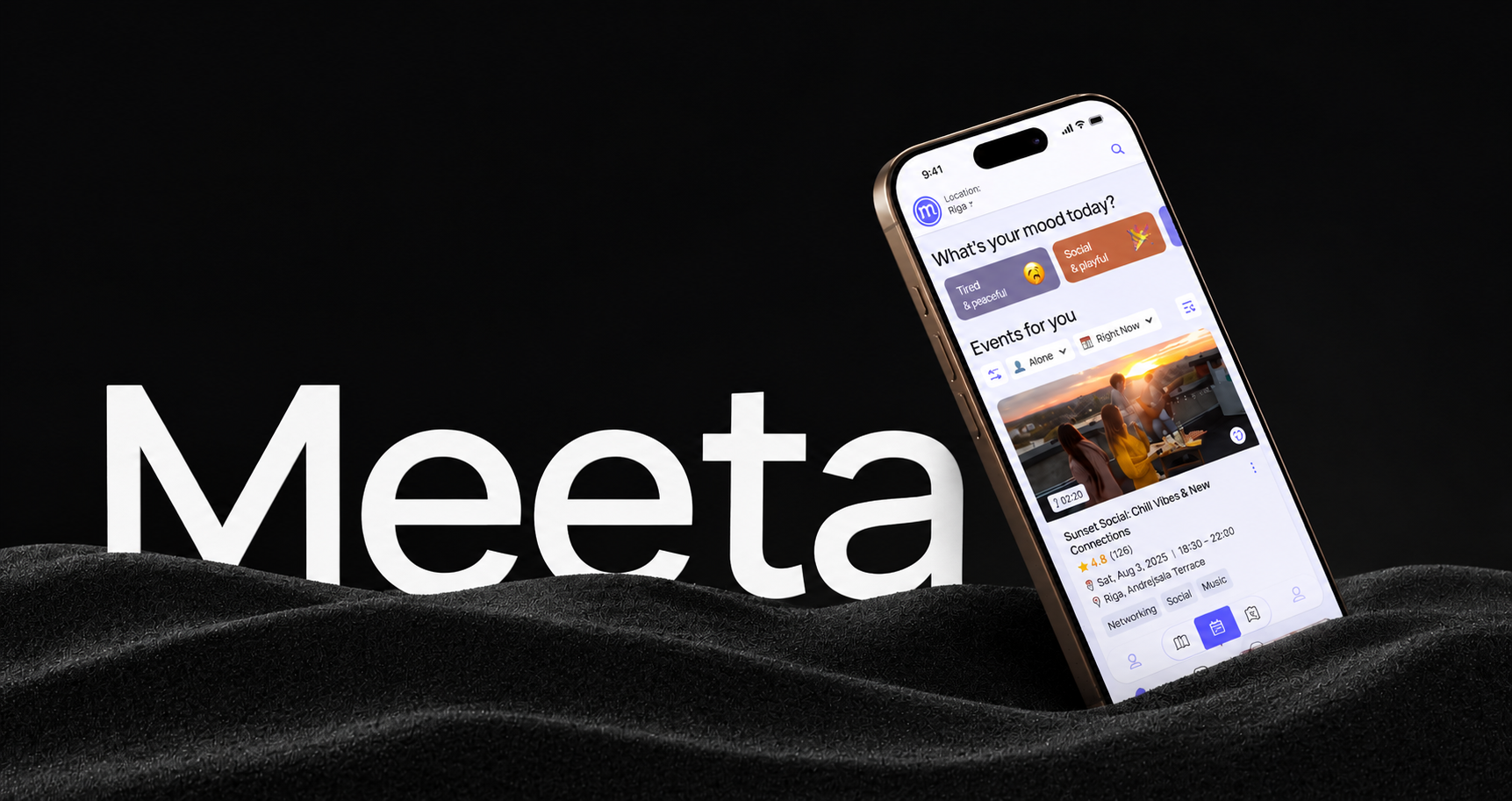
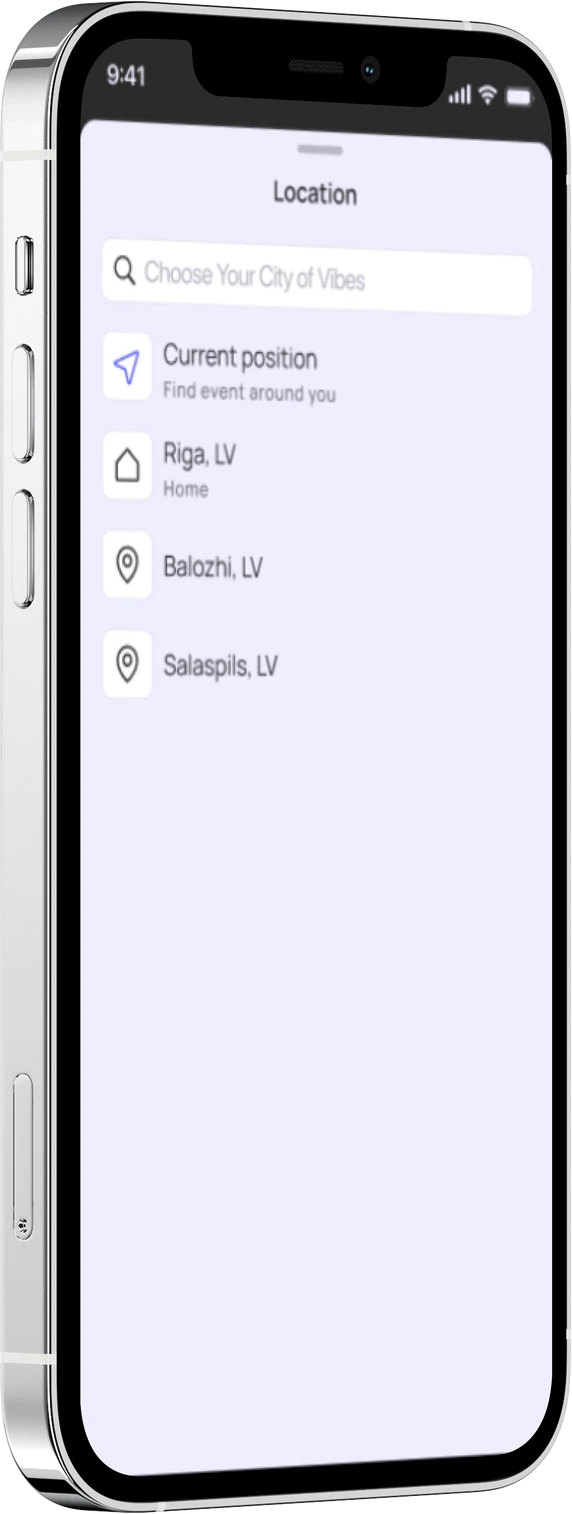
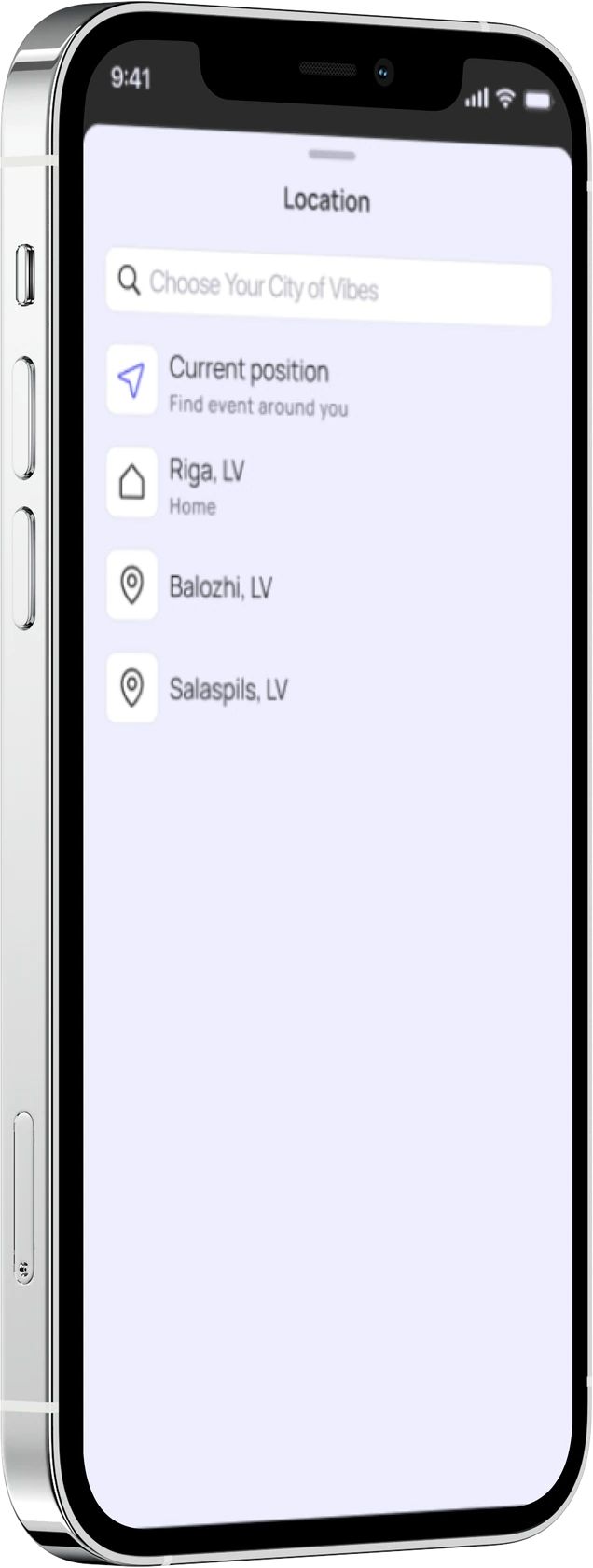
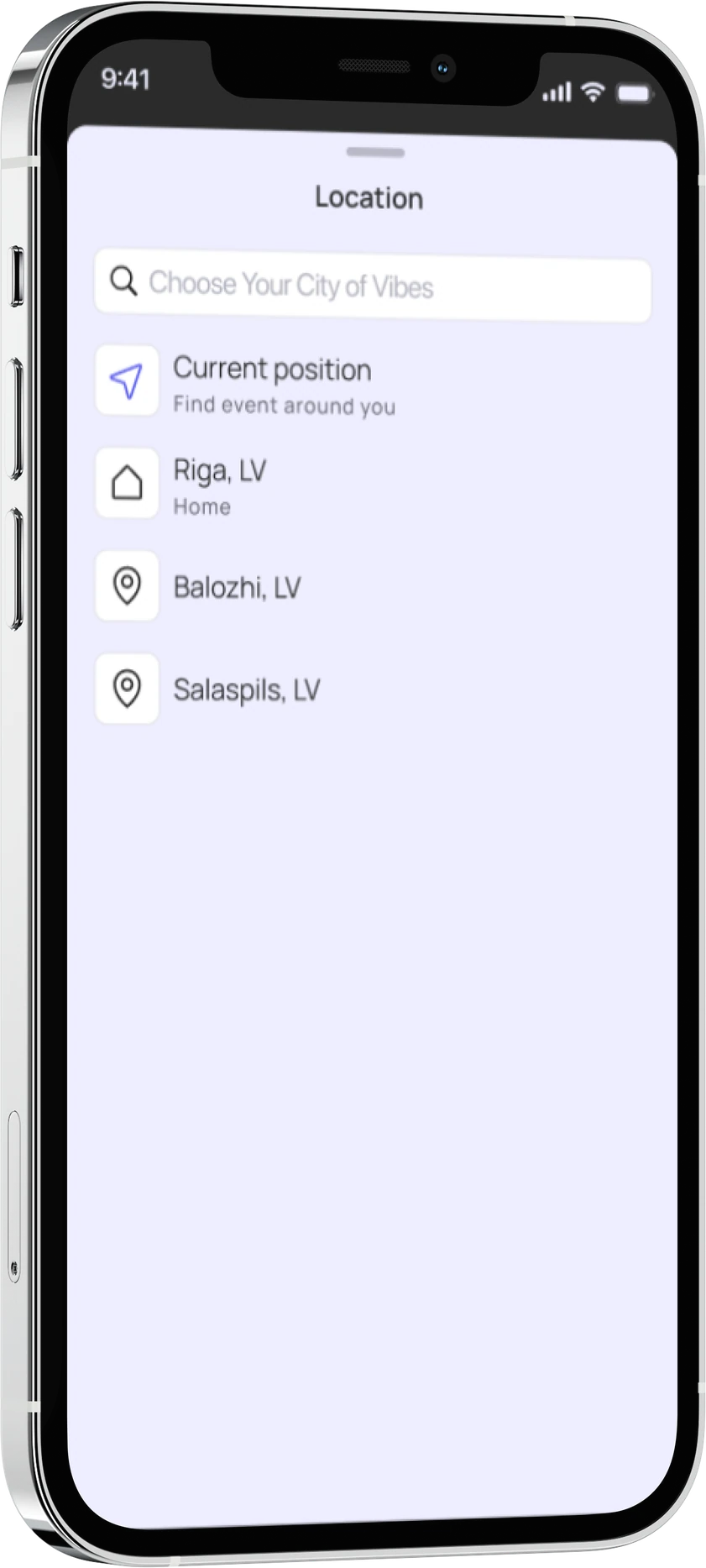
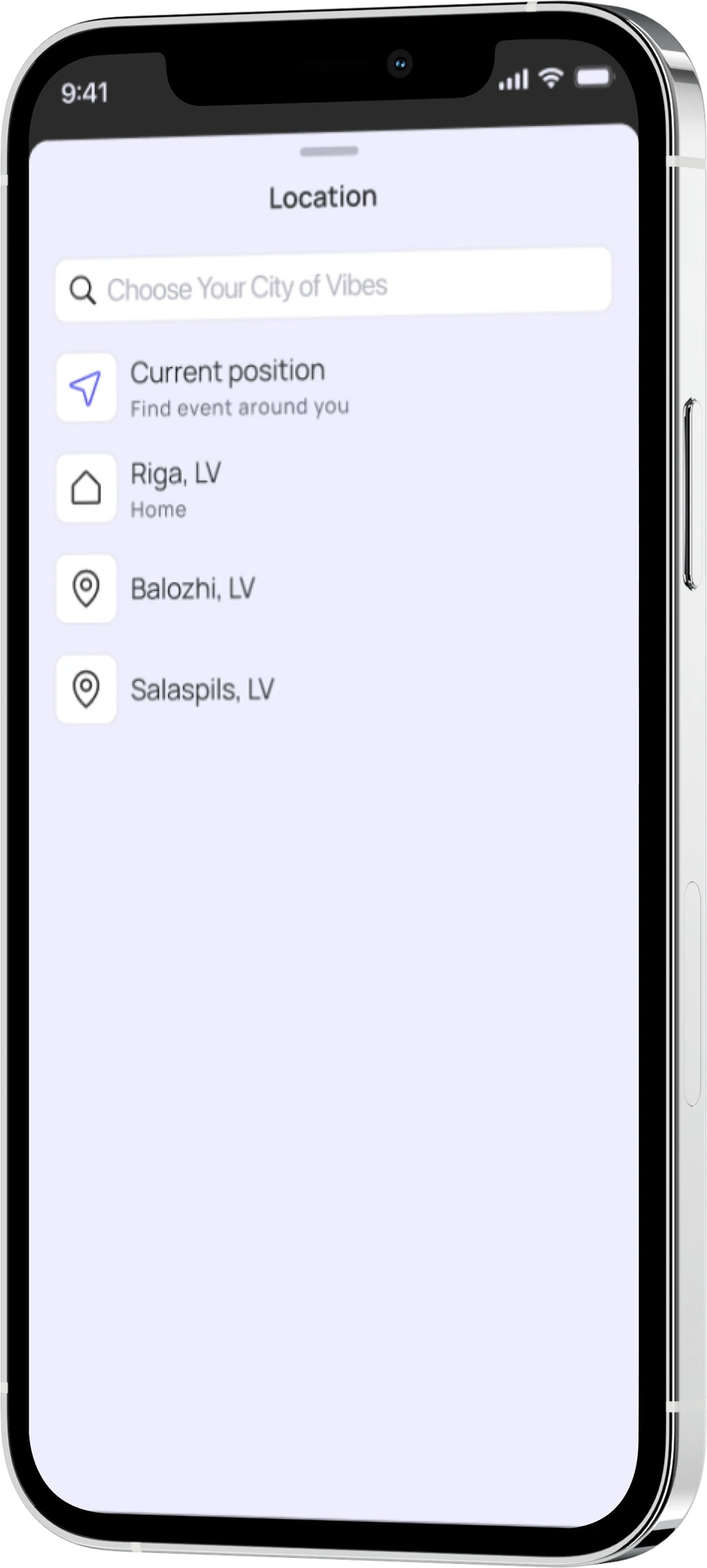
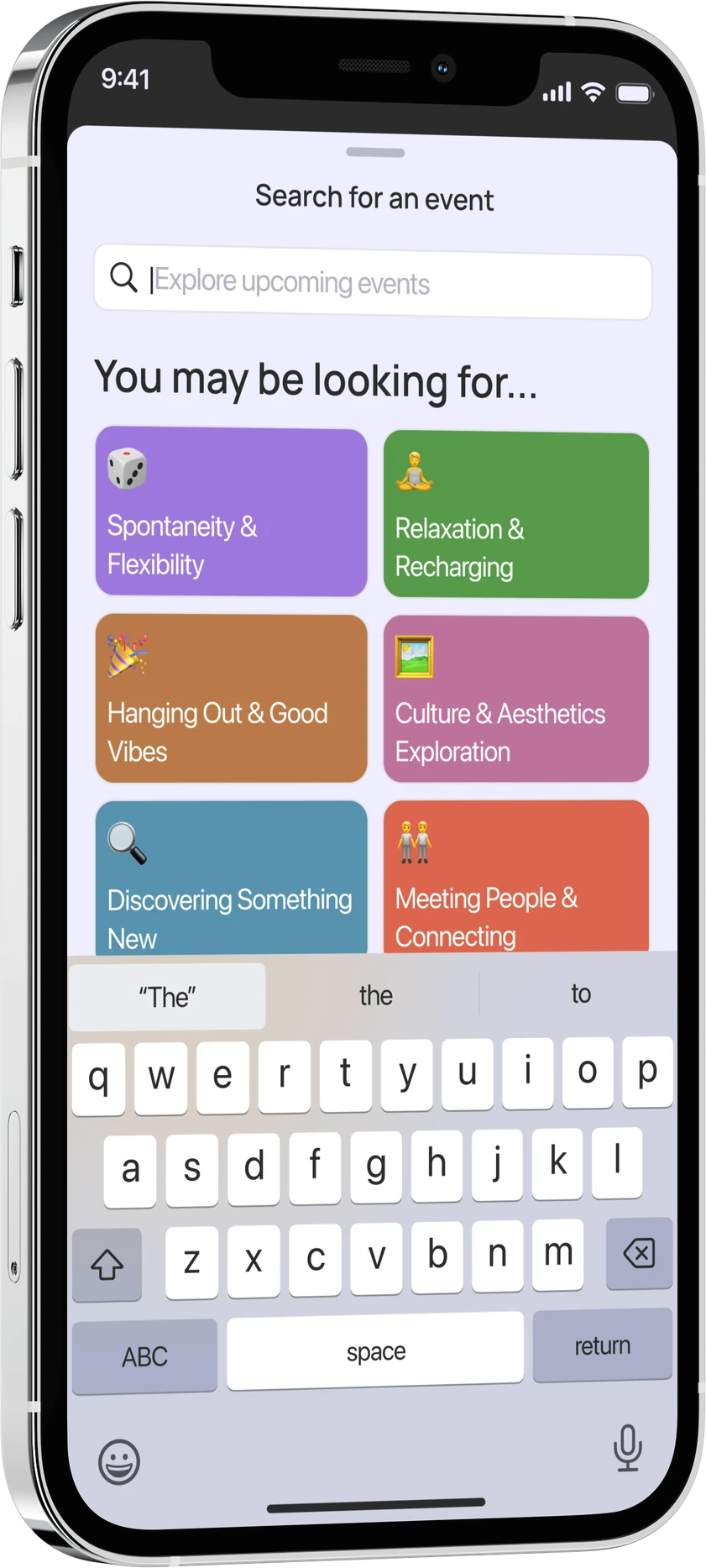
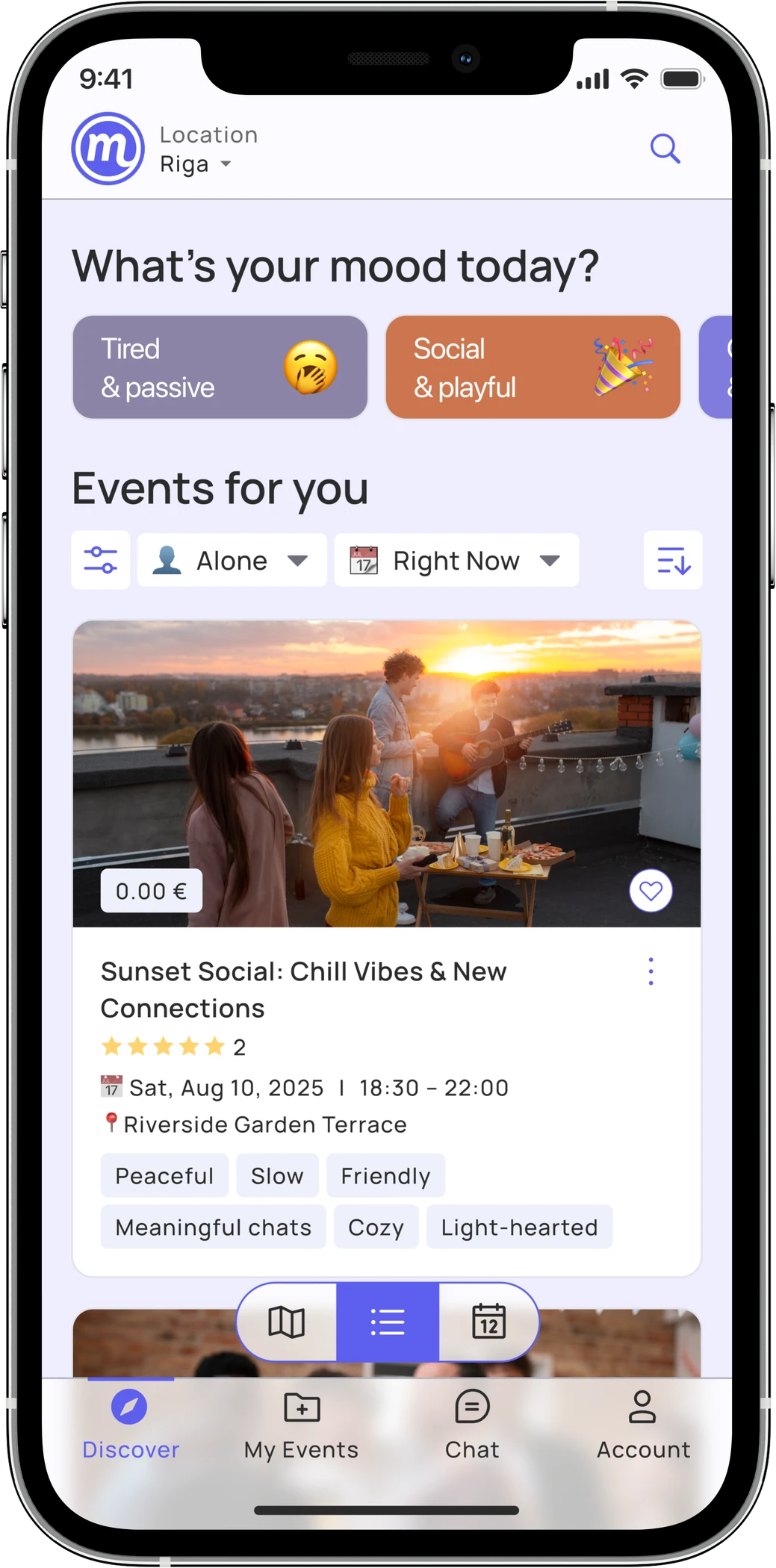
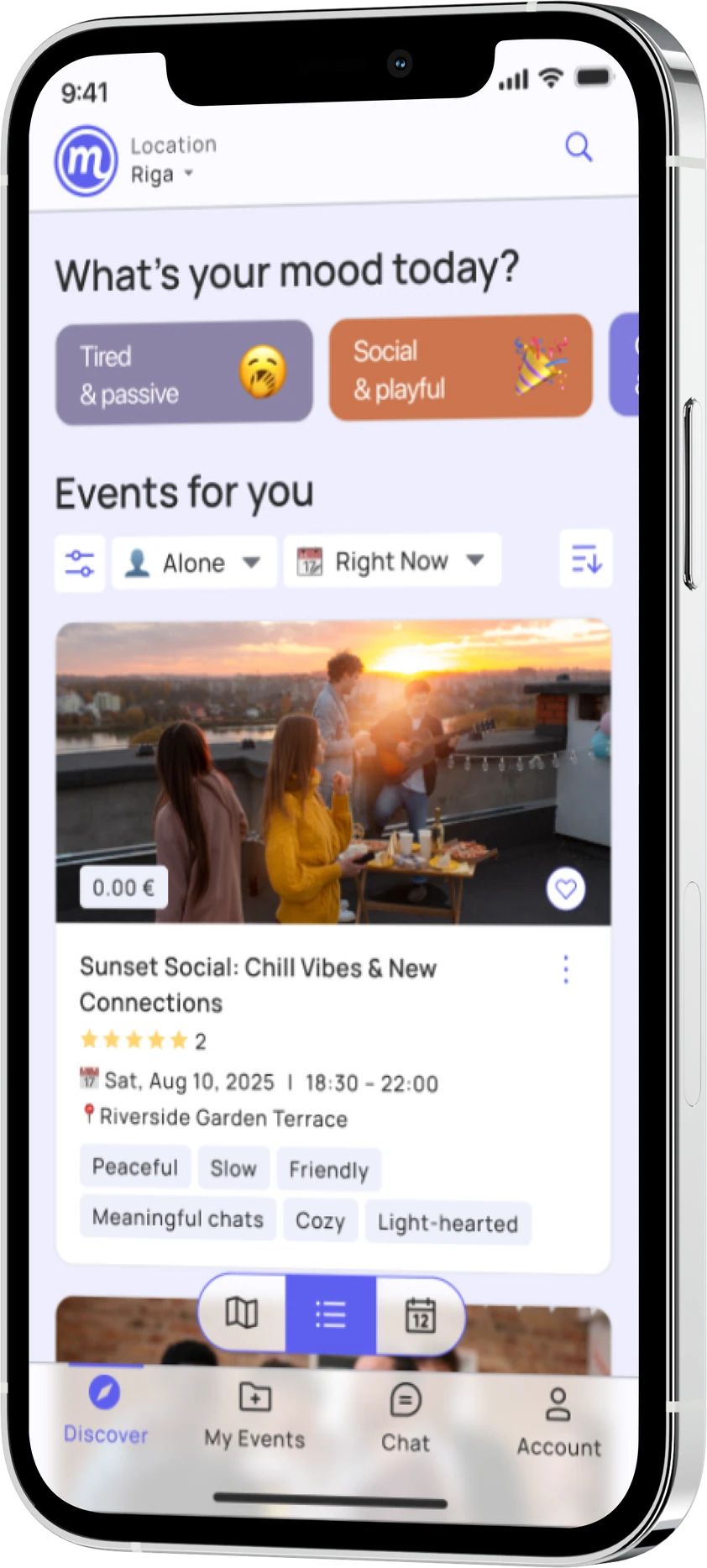
Discover nearby activities and events tailored to your interests, schedule, and location.
Scope
Research, UX/UI, Prototyping
Platform
iOS Mobile App
Timeline
1 Week
Year
2025
01/ Background
Project Context
This was a self-initiated concept exploring a different approach to event discovery. Rather than designing another search-first marketplace, the project investigated how contextual recommendations and simplified decision-making could help users discover relevant experiences faster.
The project focused on answering three key questions:
How might users discover activities without knowing exactly what they are looking for?
Which factors influence spontaneous decisions more than traditional categories?
How can browsing feel inspiring instead of overwhelming?
02/ Problem
The Challenge
People often want to do something after work, on weekends, or while visiting a new city, but discovering the right activity is surprisingly difficult. Existing event platforms prioritize searching through large catalogs instead of helping users quickly find experiences that match their current context.
Users frequently face long lists of generic events, overwhelming filters, and little personalization, leading to decision fatigue and missed opportunities. The goal of this project was to explore how a mobile experience could make event discovery feel more personal, intuitive, and effortless by focusing on how people actually decide what to do.
03/ Approach
Design Process Framework
A structured, iterative Double-Diamond design methodology was employed to navigate from initial ambiguity to a highly validated, polished interactive experience.
01Discover
Understanding the problem and users
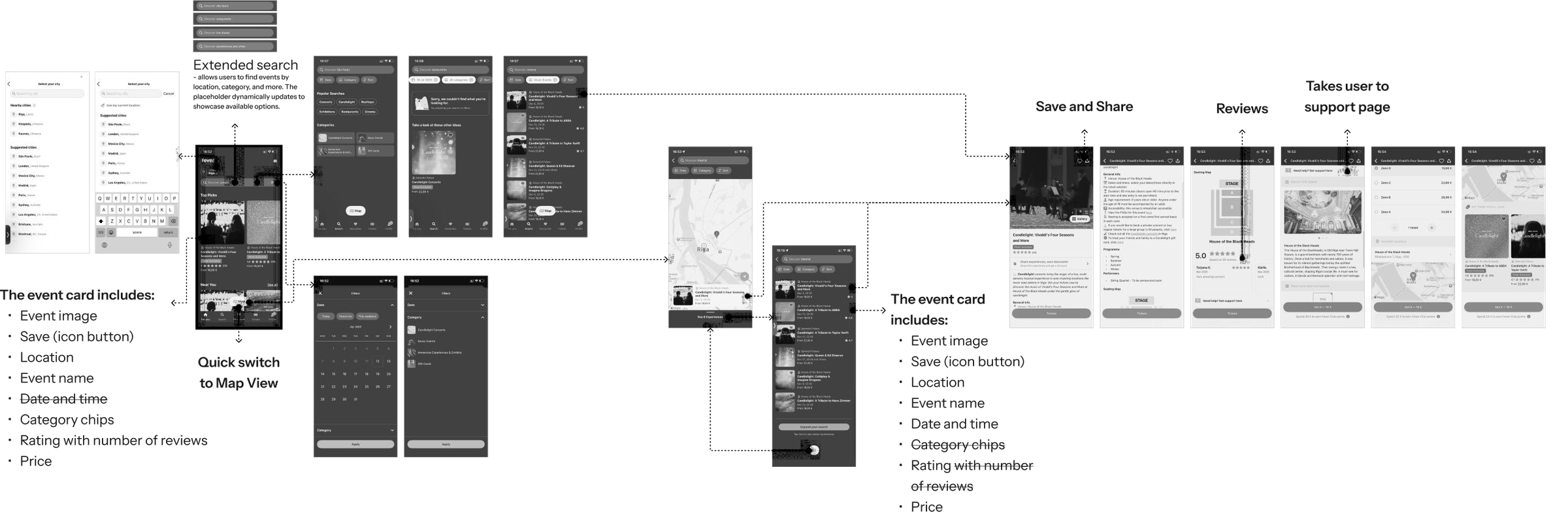
Reviewed five event platforms
Identified discovery patterns
Defined three user scenarios
02Define
Synthesizing insights
Mapped recurring user needs
Prioritized opportunities
Defined product strategy
03Develop
Exploring and designing solutions
Explored navigation models
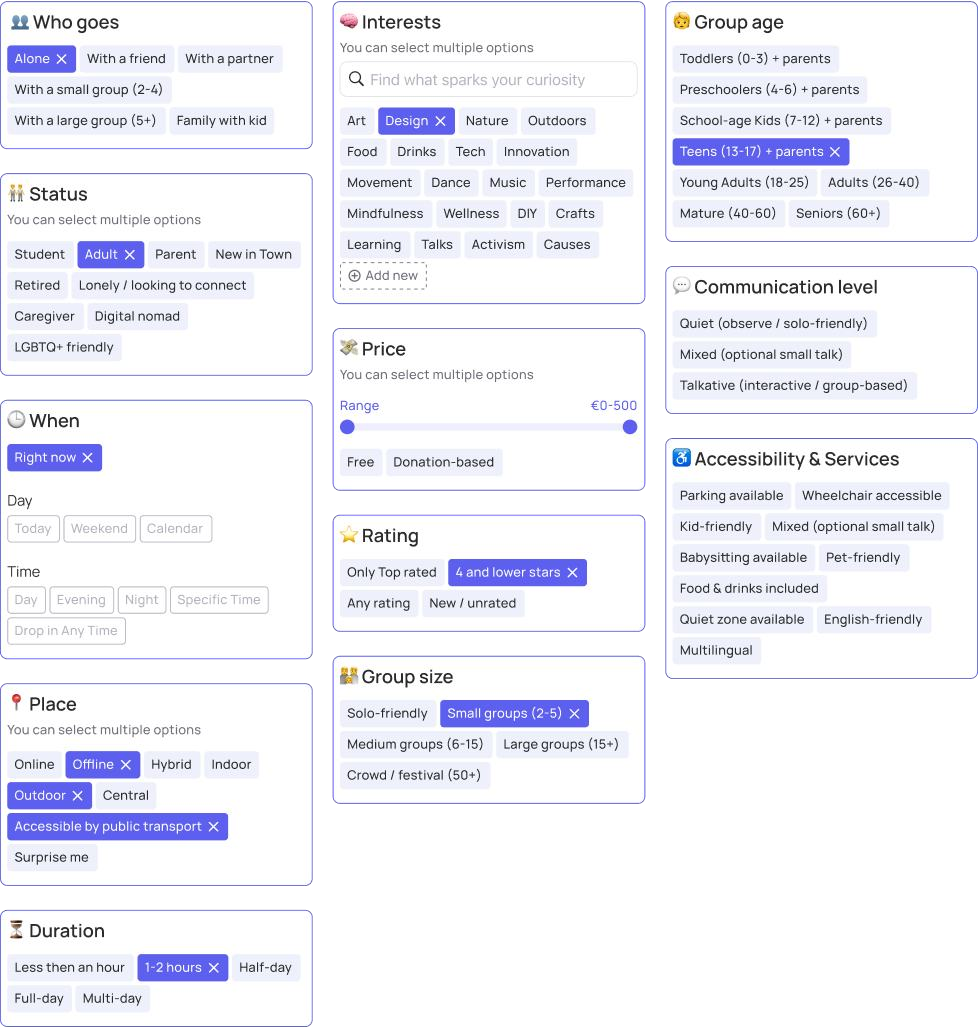
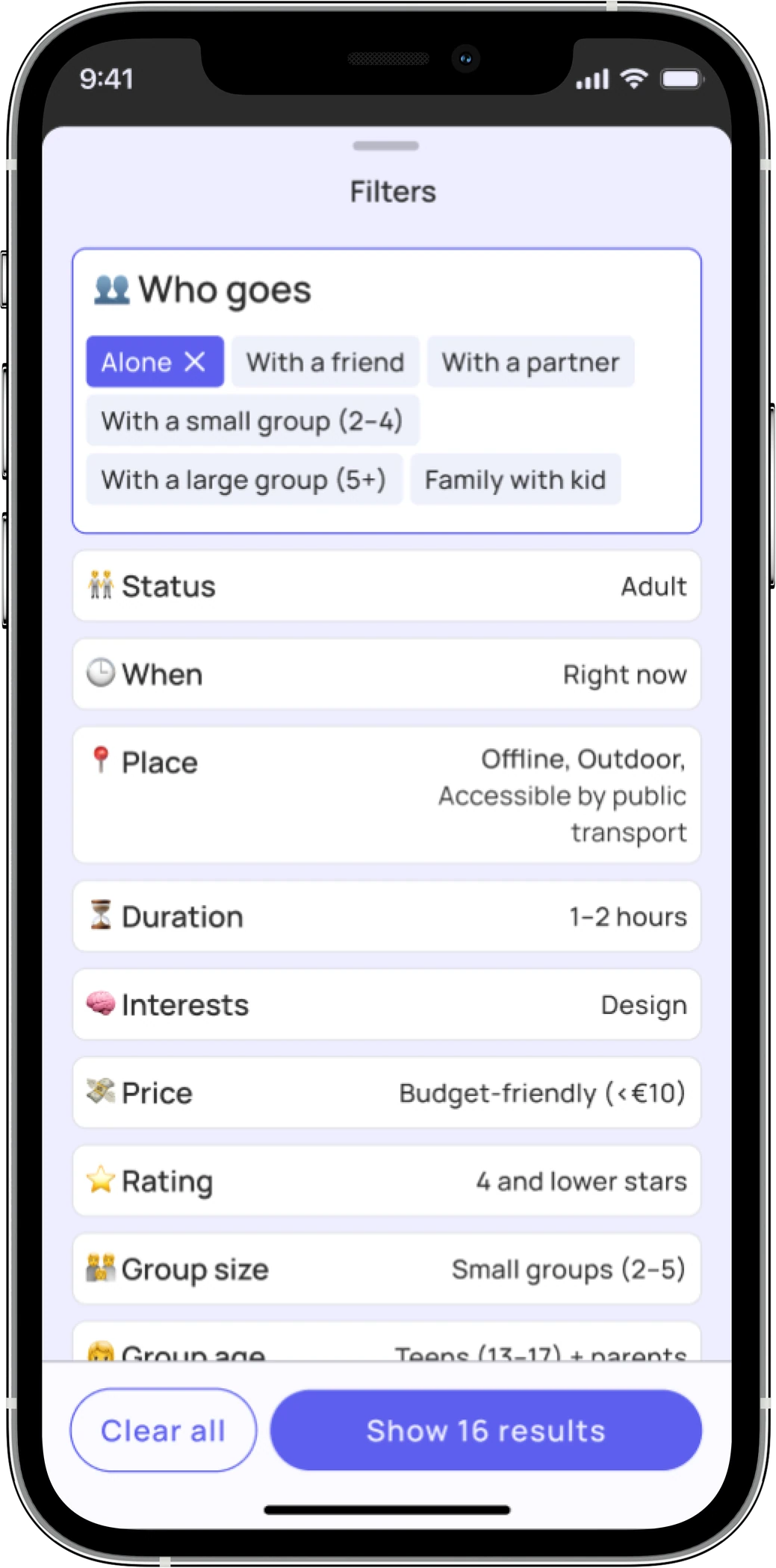
Designed contextual filtering
Built interaction patterns
04Deliver
Final solution
Final prototype
High-fidelity UI
04/ User Research
Understanding Users
The product targeted three primary audiences, which were expanded into broader proto-personas to better understand motivations, behaviors, needs, and pain points.
01
People looking for new experiences
People seeking meaningful ways to spend their free time without extensive planning.
Goals:
Break daily routine
Find enjoyable local experiences
Feel socially connected
Pain Points:
Endless scrolling
Too many irrelevant events
Unsure which events fit their mood
02
Tourists exploring a new city
Students, tourists, and newcomers looking for authentic local experiences.
Goals:
Discover hidden places
Meet people
Experience local culture
Pain Points:
Tourist-focused recommendations
Difficult to judge event atmosphere
Limited budget
03
Busy professionals with limited free time
People with limited free time looking for low-effort planning.
Goals:
Find something worthwhile quickly
Avoid complicated planning
Make better use of free evenings
Pain Points:
Decision fatigue
Information overload
Events that don't match available time
05/ Market Research
Competitor Analysis
Competitor analysis explored event discovery, local experiences, and personalized recommendations, focusing on content discovery, search, filtering, personalization, and event presentation. The findings revealed opportunities to simplify the experience while following familiar mobile patterns.
Feature
Fever
Meetup
Eventbrite
Airbnb Experiences
Luma
Opportunity for Meeta
Primary focus
Local events & entertainment
Communities & recurring groups
Event discovery & ticketing
Curated local experiences
Tech, creative & community events
Personalized activity discovery
Discovery
Personalized feed
Community-first
Search-first
Curated recommendations
Feed + invite network
Context-aware recommendations
Search
Good
Basic
Advanced
Moderate
Good
Flexible search + inspiration
Personalization
Interests & previous activity
Joined groups
Minimal
Travel interests
Network & interests
Mood, time, social context, budget, interests
Filters
Category, date, location
Category, distance
Extensive traditional filters
Category, date, price
Topic, date, location
Real-life contextual filters
Social features
Limited
Excellent
Limited
Moderate
Excellent
Contextual social discovery
Visual design
★★★★★
★★★☆☆
★★★★☆
★★★★★
★★★★★
Modern, minimal UI
Decision support
Good event cards
Community descriptions
Detailed event pages
Strong storytelling
Simple event pages
Simplified decision-making hierarchy
Main strength
Inspiring discovery
Strong communities
Huge event catalog
Premium experience
Modern community platform
Personalized, effortless discovery
Main weakness
Entertainment-focused
Outdated UX
Information overload
Travel-focused
Niche audience
Combines inspiration with contextual personalization
While each platform excels in a specific area, none combines contextual personalization, effortless discovery, and simplified decision-making into a single experience.
06/ Insights
Synthesizing Insights
After analyzing the proto-personas, recurring needs, frustrations, and motivations were identified to shape the product experience. Card sorting grouped key insights into three main experience areas and translated user expectations into relevant product features.
01Feed of events - Fast decision
Who
Alone
2+
Alone
Introvert
With a partner
1+
couple
With a small group (2–4)
2+
Group-friendly
group of friends
With a large group (5+)
3+
3–6 people
Group-friendly
group of friends
Family / kid-friendly
3+
parent
busy mom
family-friendly events
Pet friendly
1+
Alone
When
Day
Right now
2+
Right now
happening now
Today
3+
evenings
Avoids events too far or late in the evening
after-work
Weekend
4+
weekend plans
Avoids events too far or late in the evening
weekends
specific weekend
Plan ahead
4+
days ahead
Time-based filters
in advance
schedules
Time
Day
1+
Avoids events too far or late in the evening
Evening
2+
evenings
after-work
Night
2+
evenings
after-work
All day
2+
weekend plans
weekends
Mood - I feel
Suggestions based on mood
Surprise me
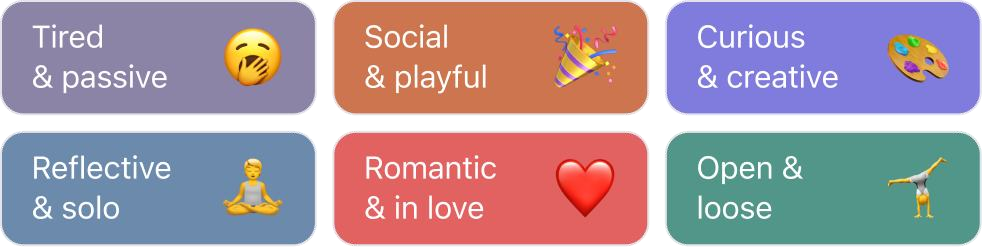
Tired / passive
12+
Needs:RestComfortLow-energy recovery
Atmosphere:CalmCozyLow-energy
without stress
Low-effort
Chill events
Low-energy
effort level
relaxing, low-effort events
Social & playful
10+
Needs:InteractionFunConnectionLight-heartedness
Atmosphere:LivelyFunLight-hearted
group of friends
socially active
Social, playful, full of energy
Curious & creative
8+
Needs:InspirationLearningExpression
Atmosphere:InspiringExperimentalHands-on
explore new things nearby
unique and real event
Romantic
10+
Needs:IntimacyBeautyShared experiences
Atmosphere:IntimateSoft-litAesthetic
intimate events with charm
couple
Atmosphere
intimate or thematic experiences
Open & spontaneous
9+
Needs:AdventureNoveltyNew connections
Atmosphere:CasualUnexpectedBuzzing
casual events
spontaneous
“Drop-in” style, not group-reliant
Reflective & solo
9+
Needs:QuietInner clarityLow interaction
Atmosphere:QuietMinimalThoughtful
Small talk - yes/no
don’t require lots of planning
No need to book far in advance
No complex logistics (like long travel, special gear, or group coordination)
Clear time, location, and pricing info upfront
Drop-in or spontaneous attendance is possible
Short or casual duration
Minimal decision-making effort
solo traveler
Family & community focused
10+
Needs:TogethernessBelongingShared values
Atmosphere:WarmInclusiveDown-to-earth
“with kids” or “babysitting available”
events for parents
meeting other moms or families
child to be social, curious, and happy
02Filters / Advanced search
When
Day
Right now
2+
Right now
happening now
Today
3+
evenings
Avoids events too far or late in the evening
after-work
Weekend
4+
weekend plans
Avoids events too far or late in the evening
weekends
specific weekend
Plan ahead
4+
days ahead
Time-based filters
in advance
schedules
Time
Day
1+
Avoids events too far or late in the evening
Evening
2+
evenings
after-work
Night
2+
evenings
after-work
All day
2+
weekend plans
weekends
Specific Time
Where
Online / hybrid
Nature / outdoor
Central / accessible by public transport
Distance
5+
Near me
nearby relaxing events,
Close and easy
Distance
near us
City
2+
New in town
exploring new cities
Global
1+
solo traveler
Interests
Art
Design
Nature
Outdoors
Food
Drink
Tech
Innovation
Movement
Dance
Music
Performance
Mindfulness
Wellness
DIY
Crafts
Learning
Talks
Activism
Causes
8+
Design
food
art
culture
Local culture
new traditions
music
other cultures
Duration
< 1 hour
1–2 hours
Half-day
Full-day
Multi-day
4+
timing
duration
limited free time
Limited free time
Price
Free
Budget-friendly (< €10)
Mid-range (€10–30)
Premium (€30+)
Pay what you want
Donation-based
5+
budget
don’t cost a lot
budget-friendly
Affordable or free options
student-budget
Rating
★★★★★ Only (Top rated)
4+ stars
Any rating
New / unrated
4+
Trusted reviews
word-of-mouth
ratings
Trusted reviews or highlights
Social context
Alone
2+
Alone
Introvert
With a partner
1+
couple
With a small group (2–4)
2+
Group-friendly
group of friends
With a large group (5+)
3+
3–6 people
Group-friendly
group of friends
Family with kid
3+
parent
busy mom
family-friendly events
Status
Student
Adult
Parent
New in town
Retired
Lonely / looking to connect
Caregiver
Digital nomad
LGBTQ+ friendly
Group size
Solo-friendly
Small groups (2–5)
Medium groups (6–15)
Large groups (15+)
Crowd / festival (50+)
Age group
Toddlers (0–3) + parents
School-age Kids (7–12) + parents
Teens (13–17)
Young Adults (18–25)
Adults (26–40)
Mature (40–60)
Seniors (60+)
5+
adult
age ranges
kid-friendly
kids' age
age - 50s
Communication level
Quiet (observe / solo-friendly)
Mixed (optional small talk)
Talkative (interactive / group-based)
Accessibility & Services
Parking available
Wheelchair accessible
Kid-friendly
Babysitting available
Pet-friendly
Food & drinks included
Quiet zone available
English-friendly
Multilingual
3+
parking
accessibility
“with kids” or “babysitting available”
03Event details
Rating
Trusted reviews
word-of-mouth
ratings
Trusted reviews or highlights
Actions with event
“Not interested”
schedule
Easy-to-join
Save event
Shares links with other parents
one-click RSVP or ticket purchase
add events to his calendar
add events directly to my calendar
rely on each other’s opinions
bookmark
Share links
plan without stress
invite friends
plan ahead
Share on socials
Search together
vote quickly
tools to research (Google, social, apps)
04Interface
Interface
good localization
Multilingual
No endless scrolling
No generic, but personalized
Clarity on vibe and crowd
elegance, depth, storytelling
curated lists or recommendations
Adds events quickly to calendar
complicated descriptions
Easy overview
translated or clear descriptions
Smart recommendations
short descriptions
smart suggestions
visual-based browsing
not always super tech-savvy
visual descriptions
calendar view
list/map toggle
07/ Visual Exploration
Visual Direction
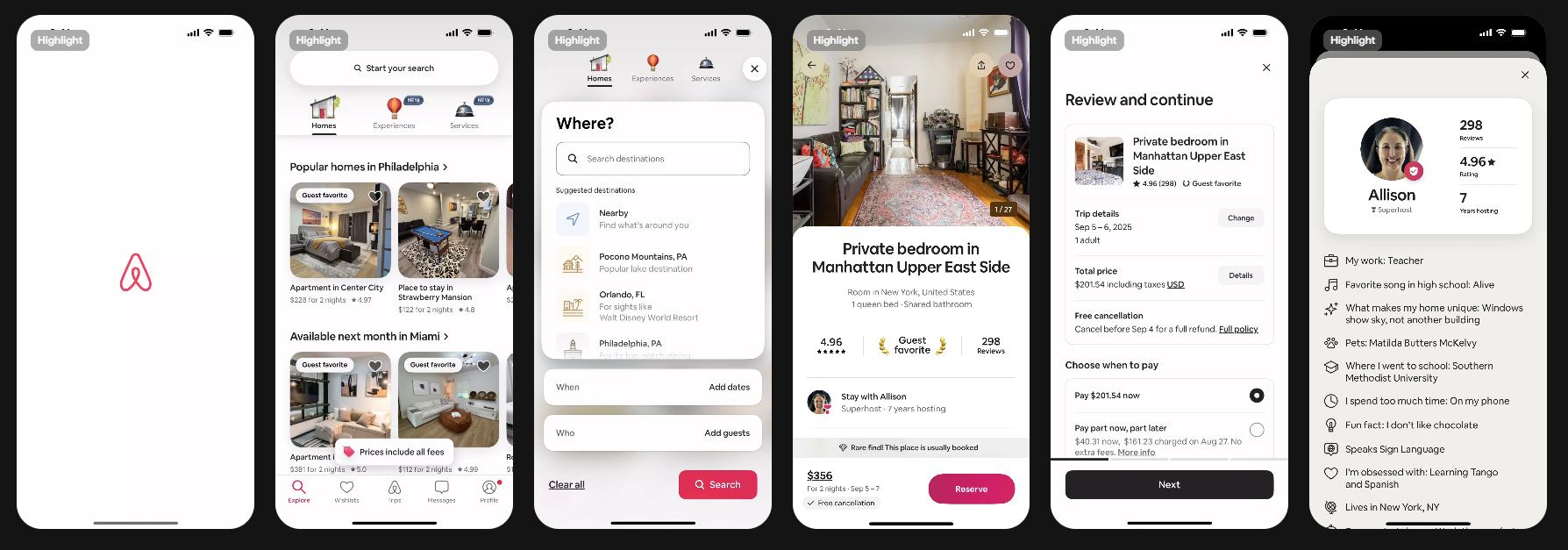
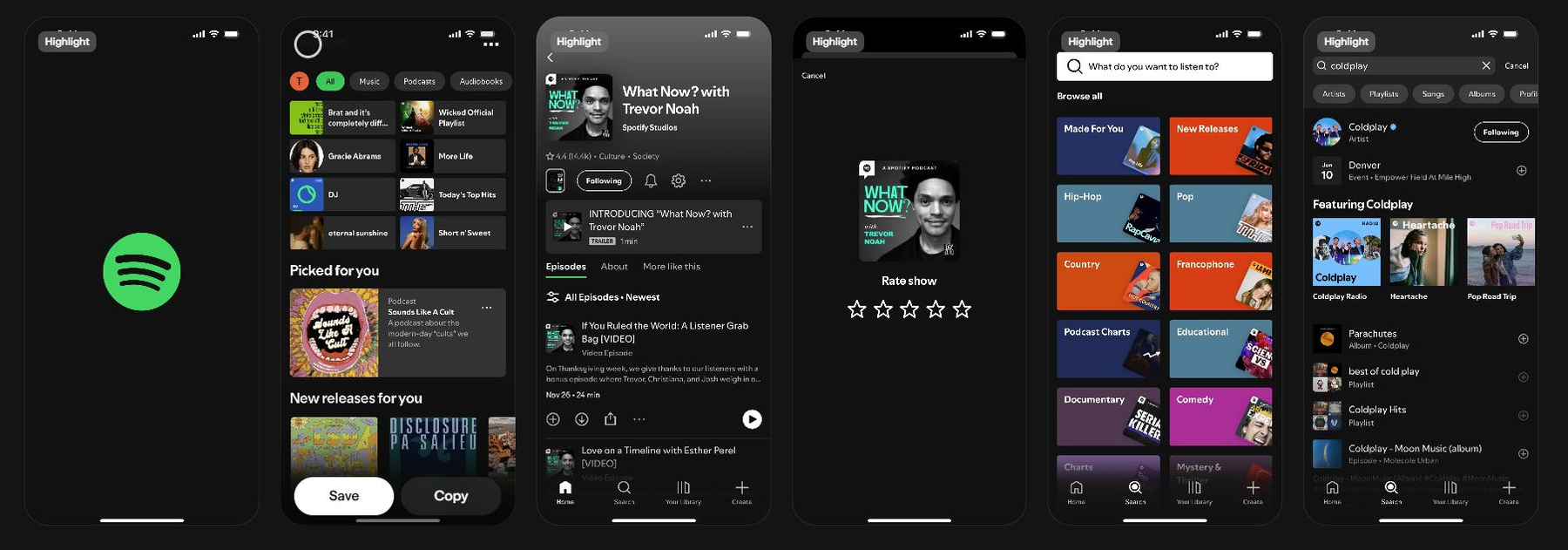
Before designing the interface, different visual directions were explored to define the app's look and feel. This helped establish a modern, energetic, and welcoming style that guided the overall design. The visual direction combines Airbnb's warm, editorial presentation with Spotify's expressive use of mood and personalization. The goal was to create an interface that feels approachable, energetic, and inspires exploration rather than task completion.
Airbnb.
Clean layouts, warm and human design, strong typography and great event/city browsing UX.
Spotify.
Mood, intention, and personalization visually
08/ Design Strategy
Key UX Decisions
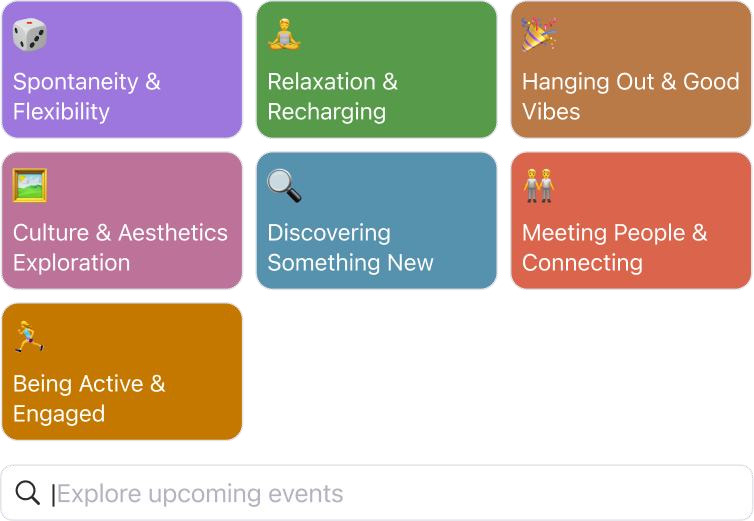
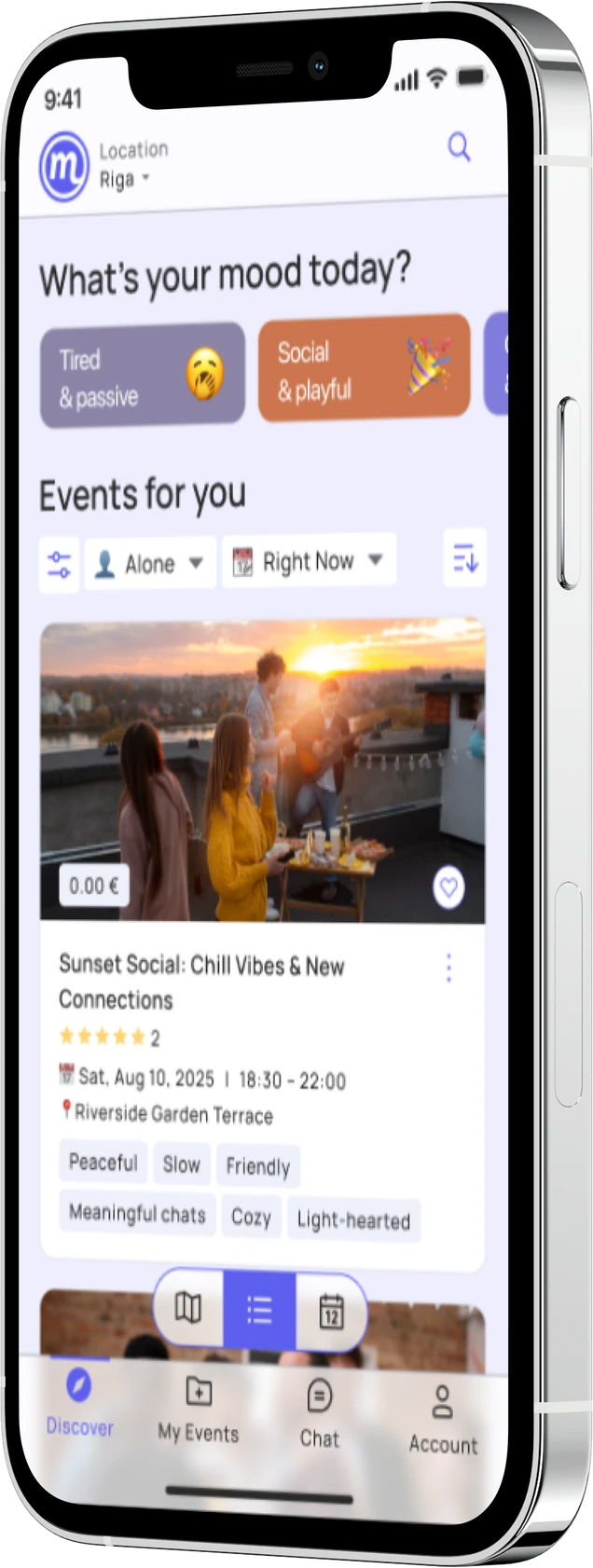
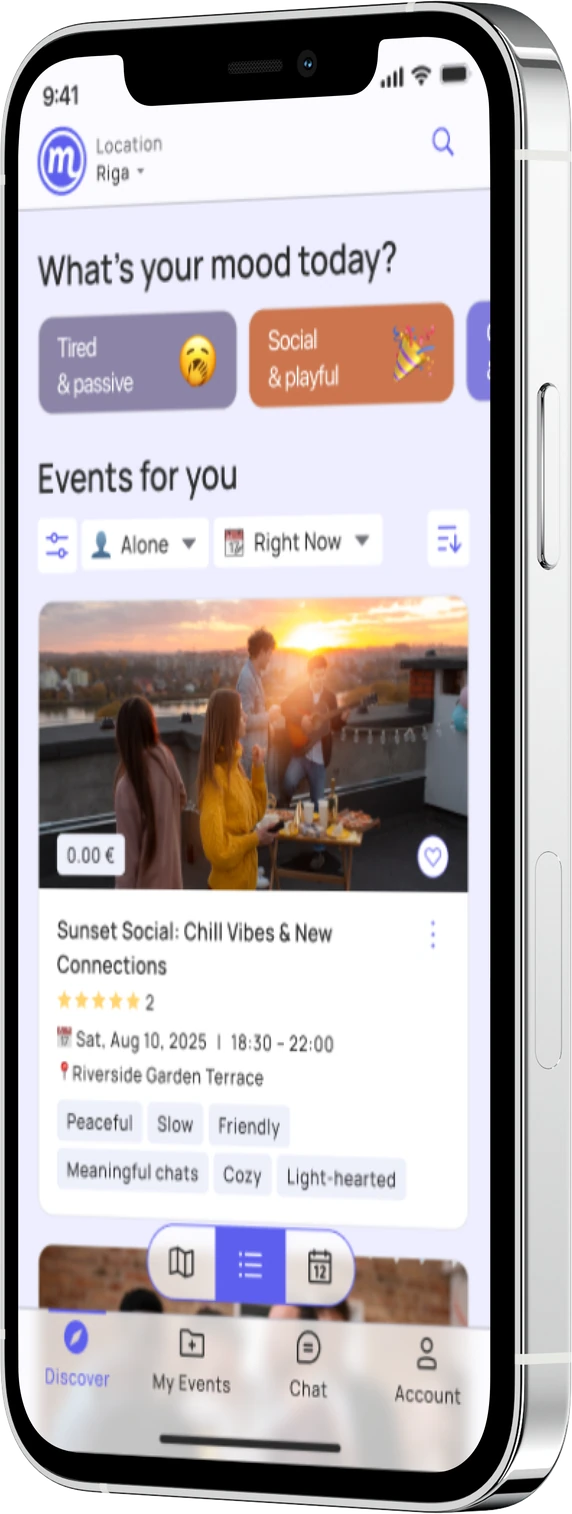
Mood-first recommendations
Instead of asking users what category they want, recommendations begin with how they currently feel. People naturally think: "I want something relaxing." rather than "Show me cultural activities."
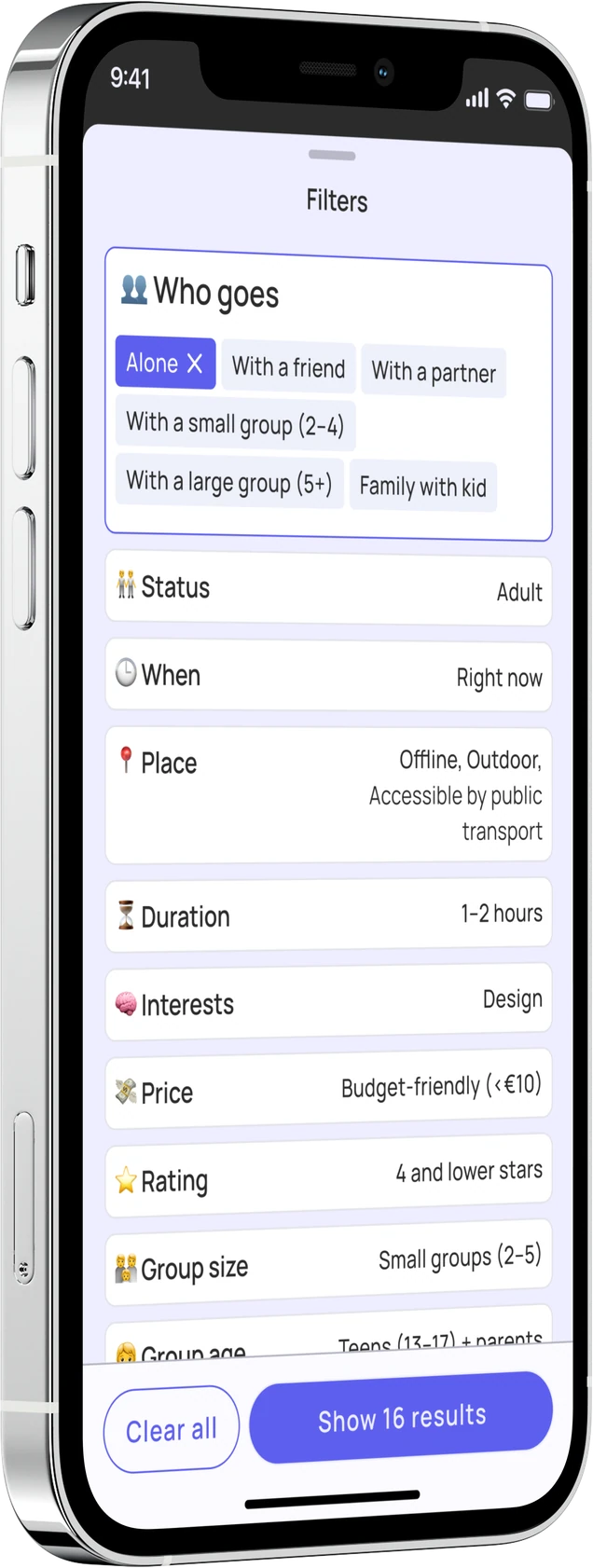
Contextual Filters
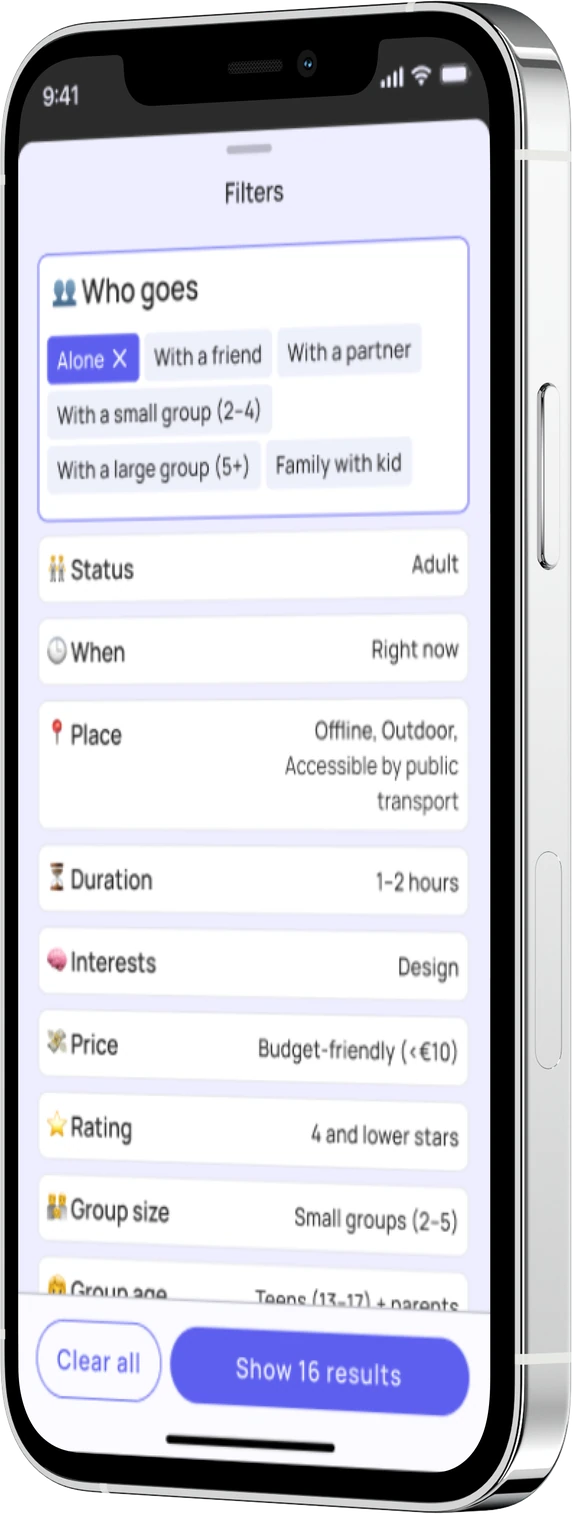
Filtering focuses on factors that influence real-world decisions:
Mood
Time
Budget
Distance
Group size
Communication level
Accessibility
This reduces unnecessary filtering while increasing relevance.
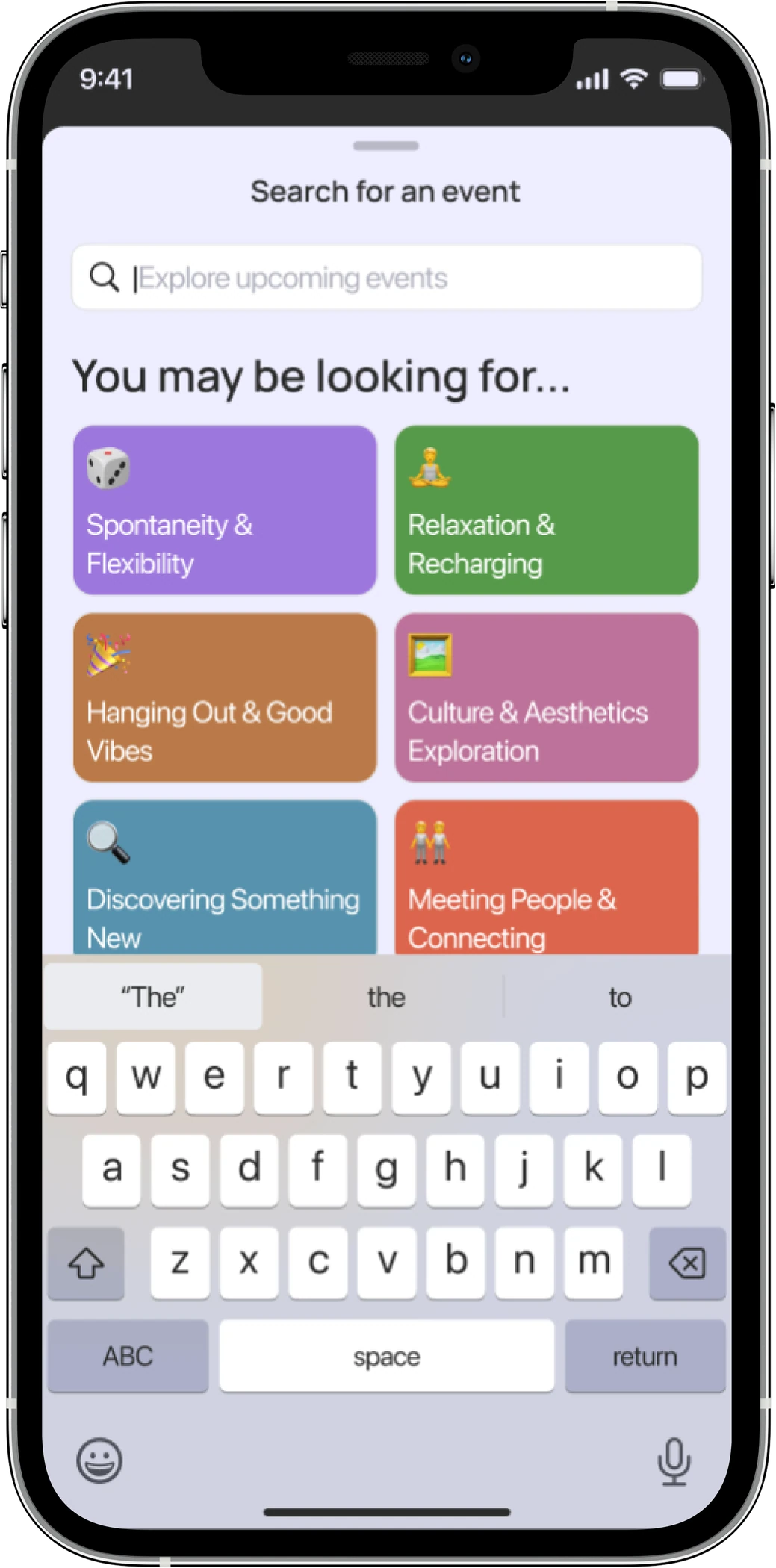
Flexible Search
The experience supports two browsing behaviors:
Users searching for a specific activity.
Users looking for inspiration.
Both flows coexist without overwhelming the interface.
Multiple exploration modes
Different users naturally plan differently. Some prefer browsing visually. Others think geographically. Some schedule around their calendar. Supporting List, Map, and Calendar views accommodates all three behaviors without changing the core experience.
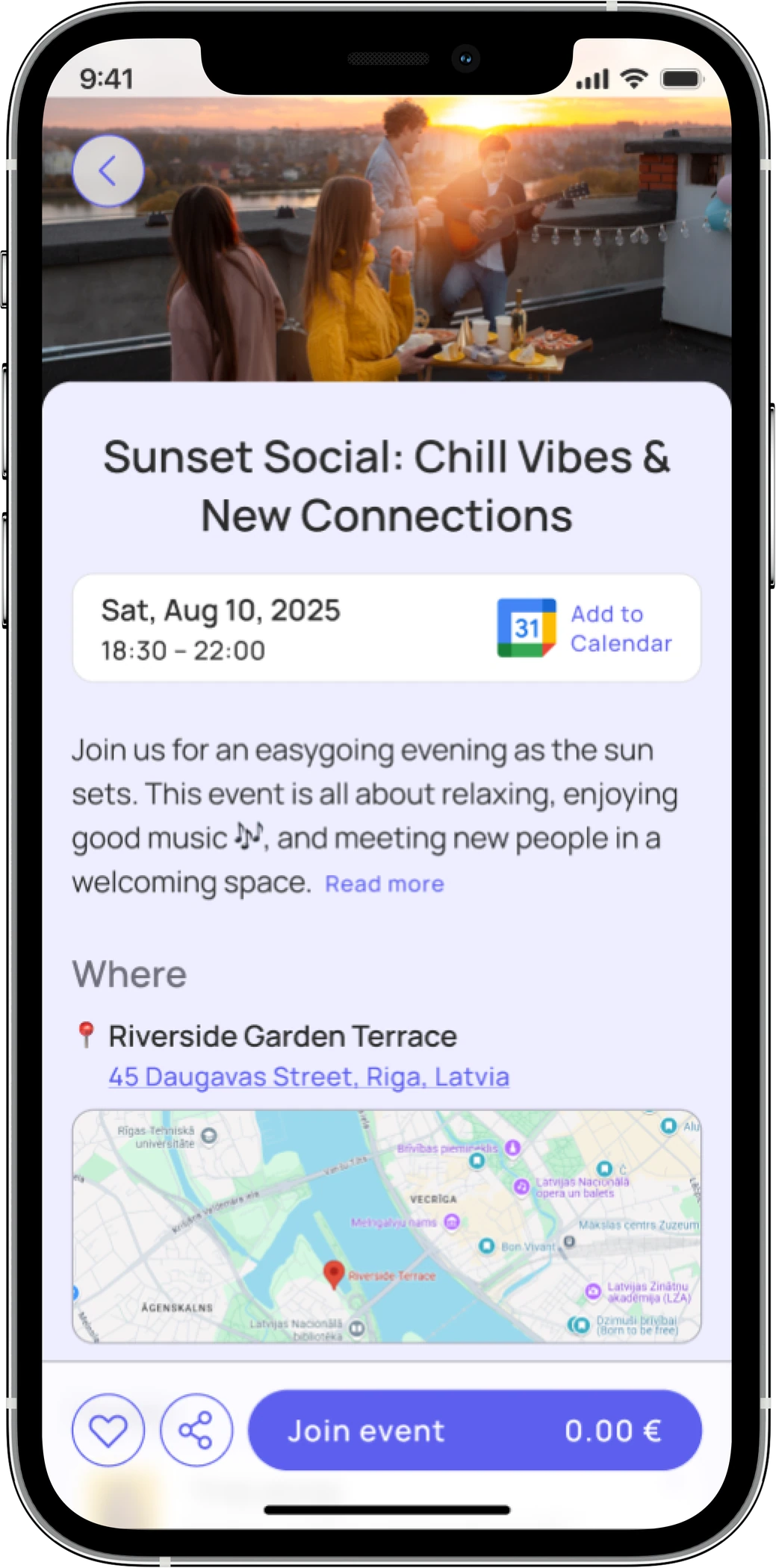
Simplified Event Details
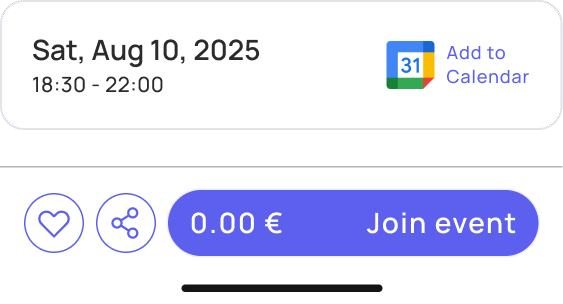
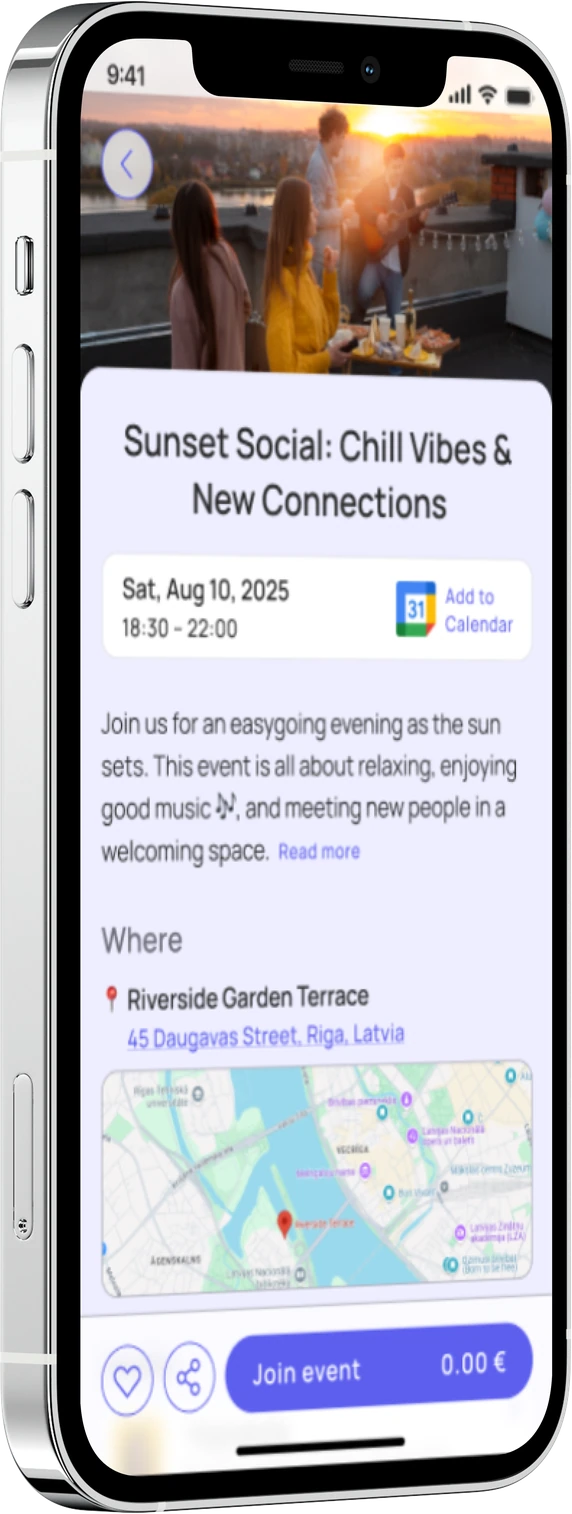
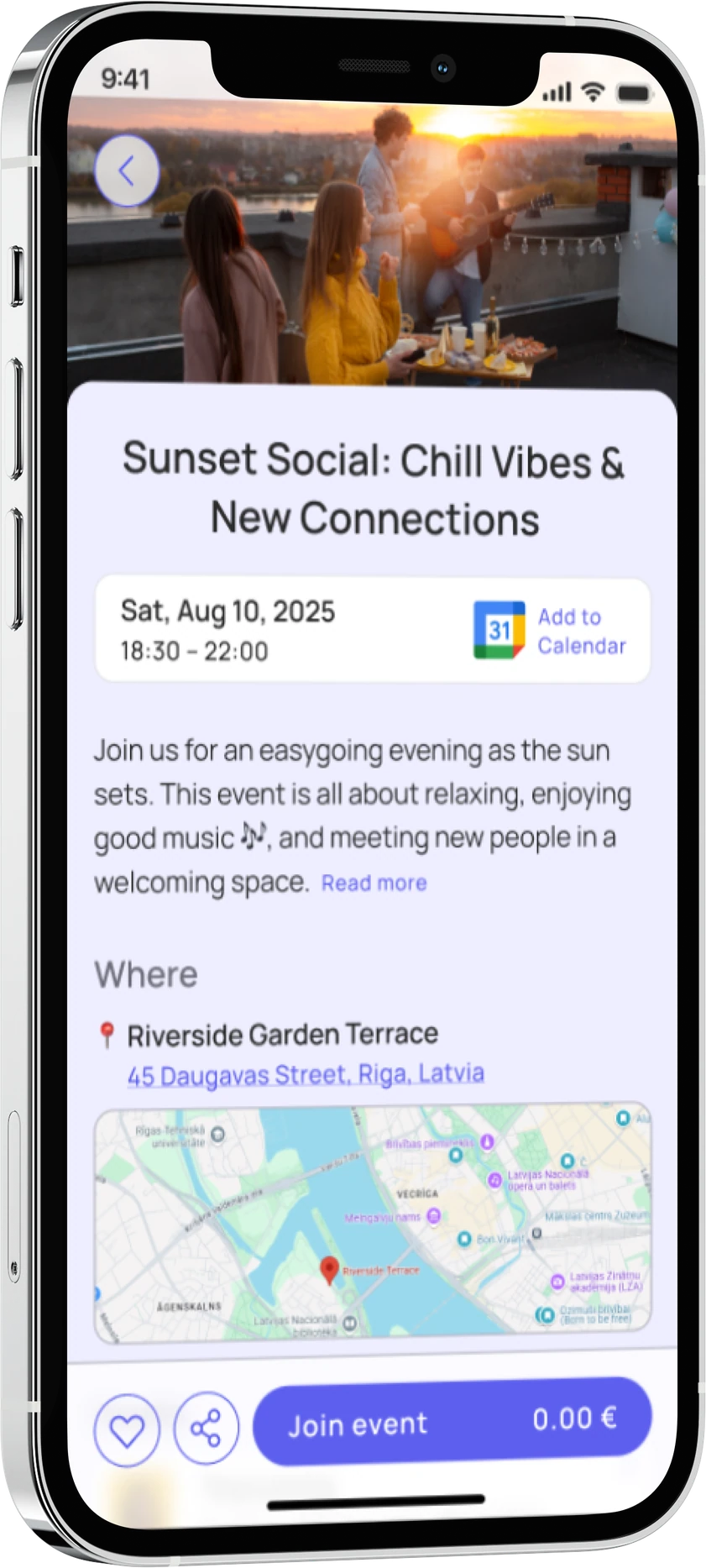
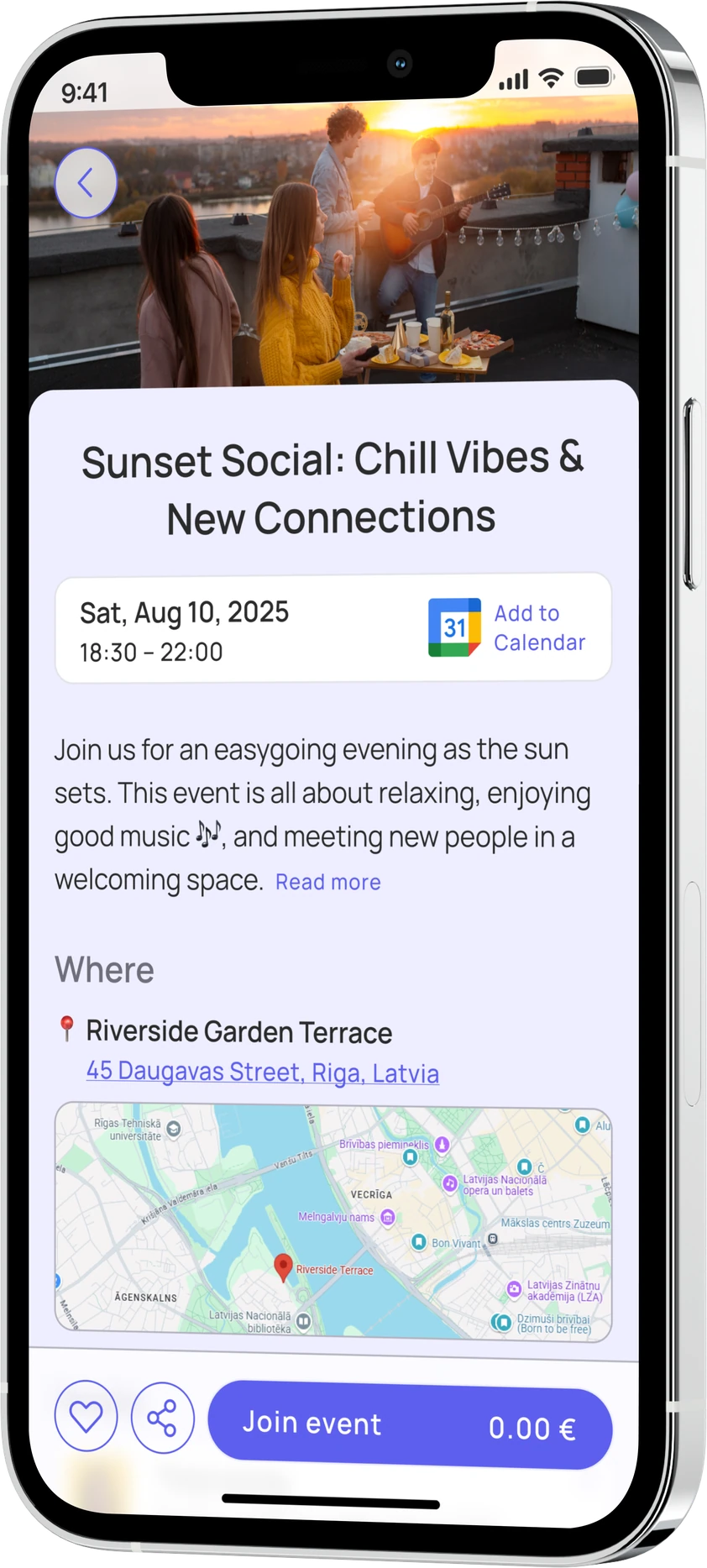
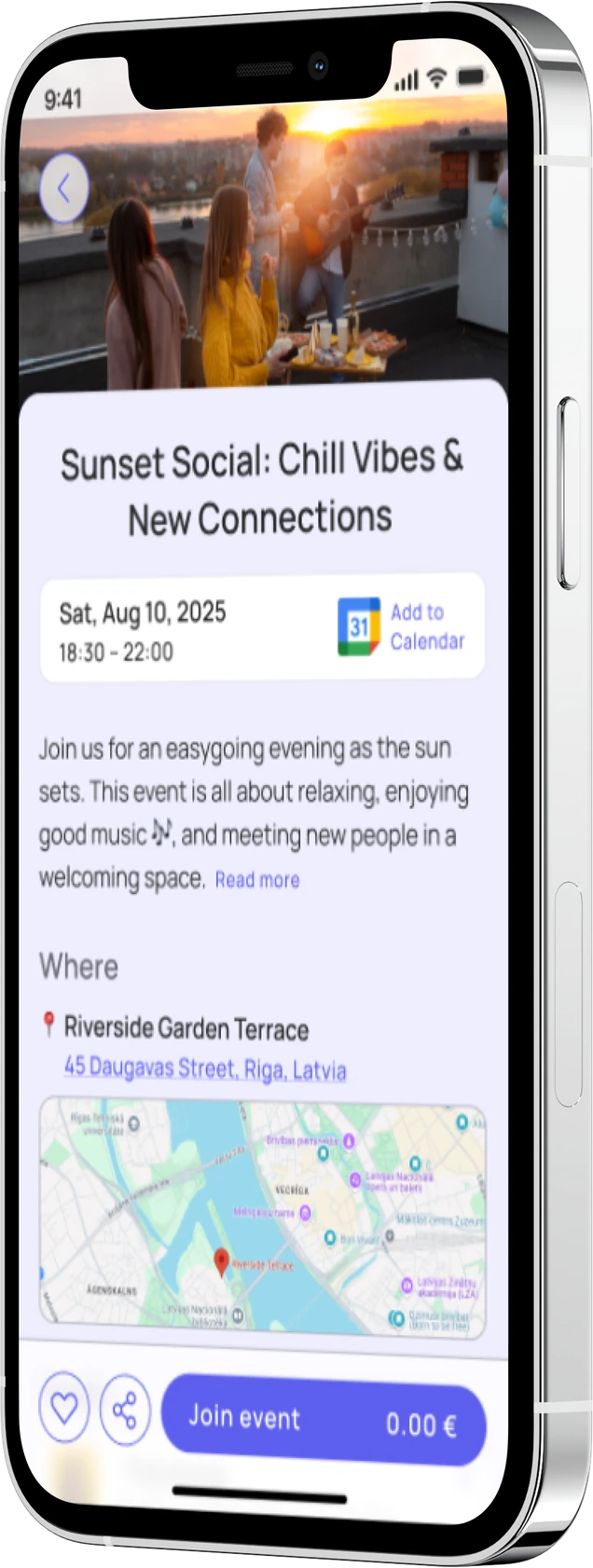
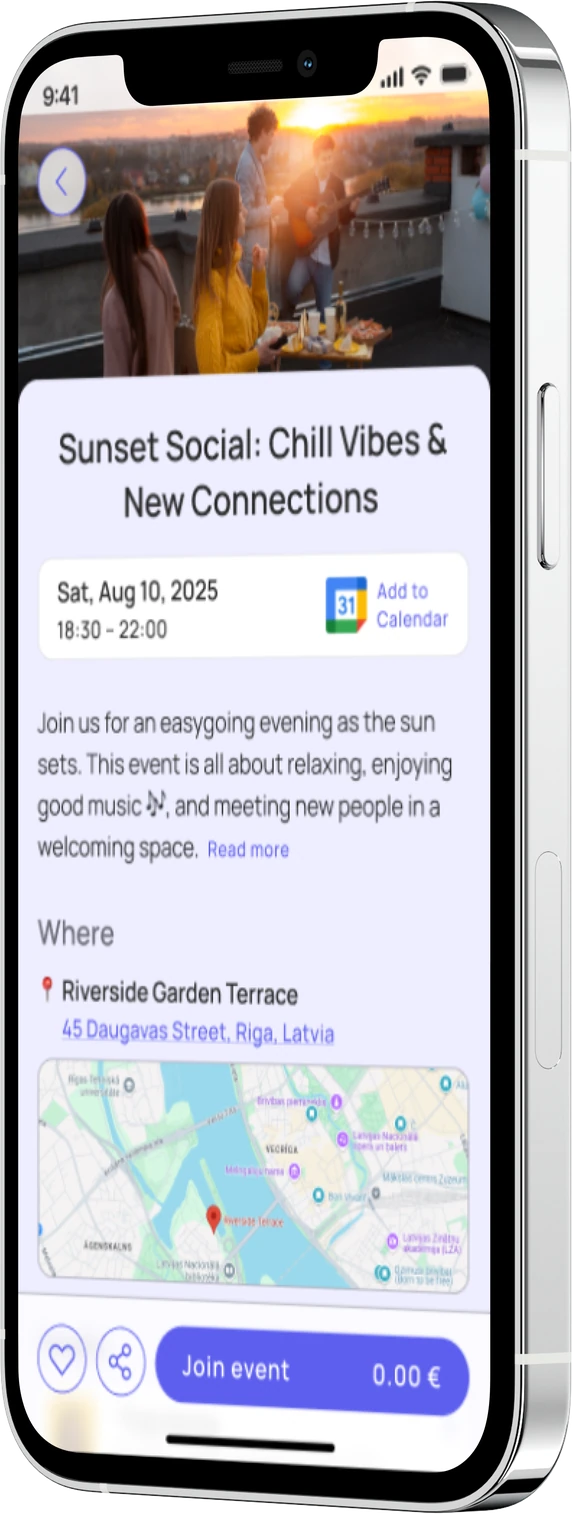
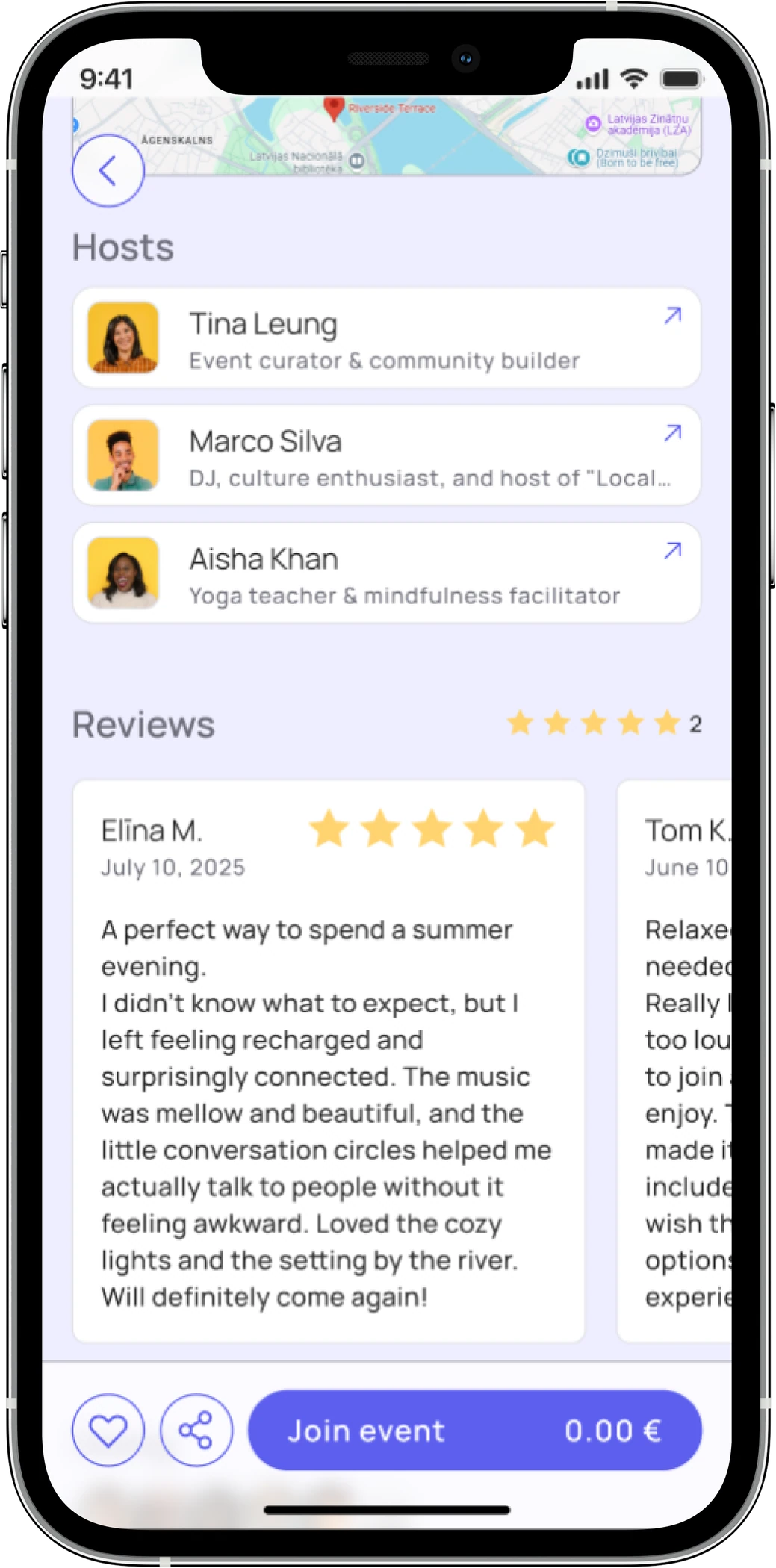
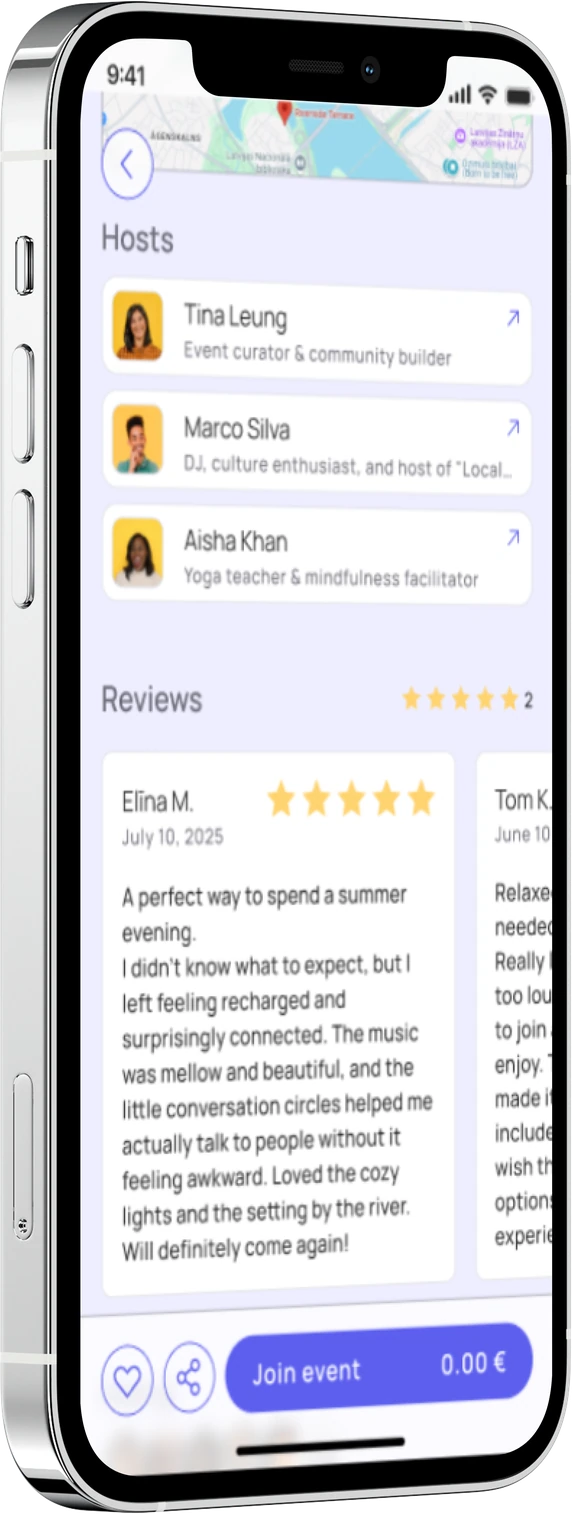
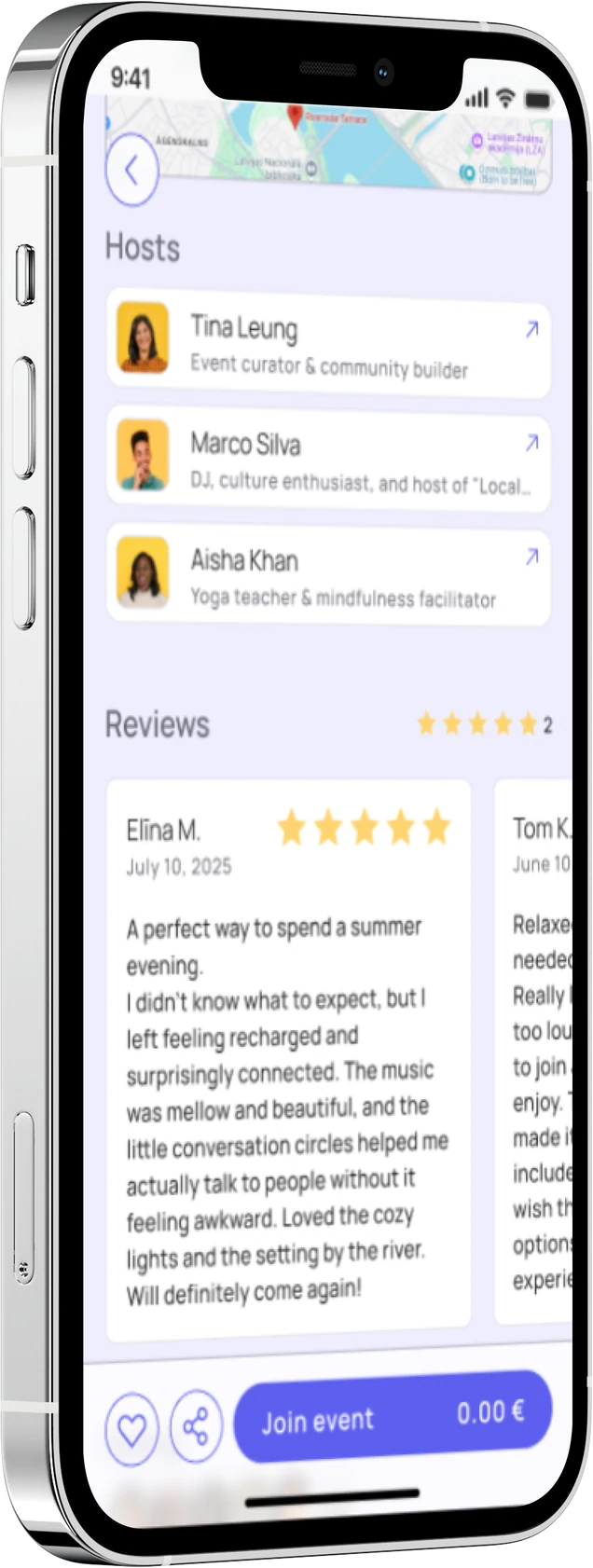
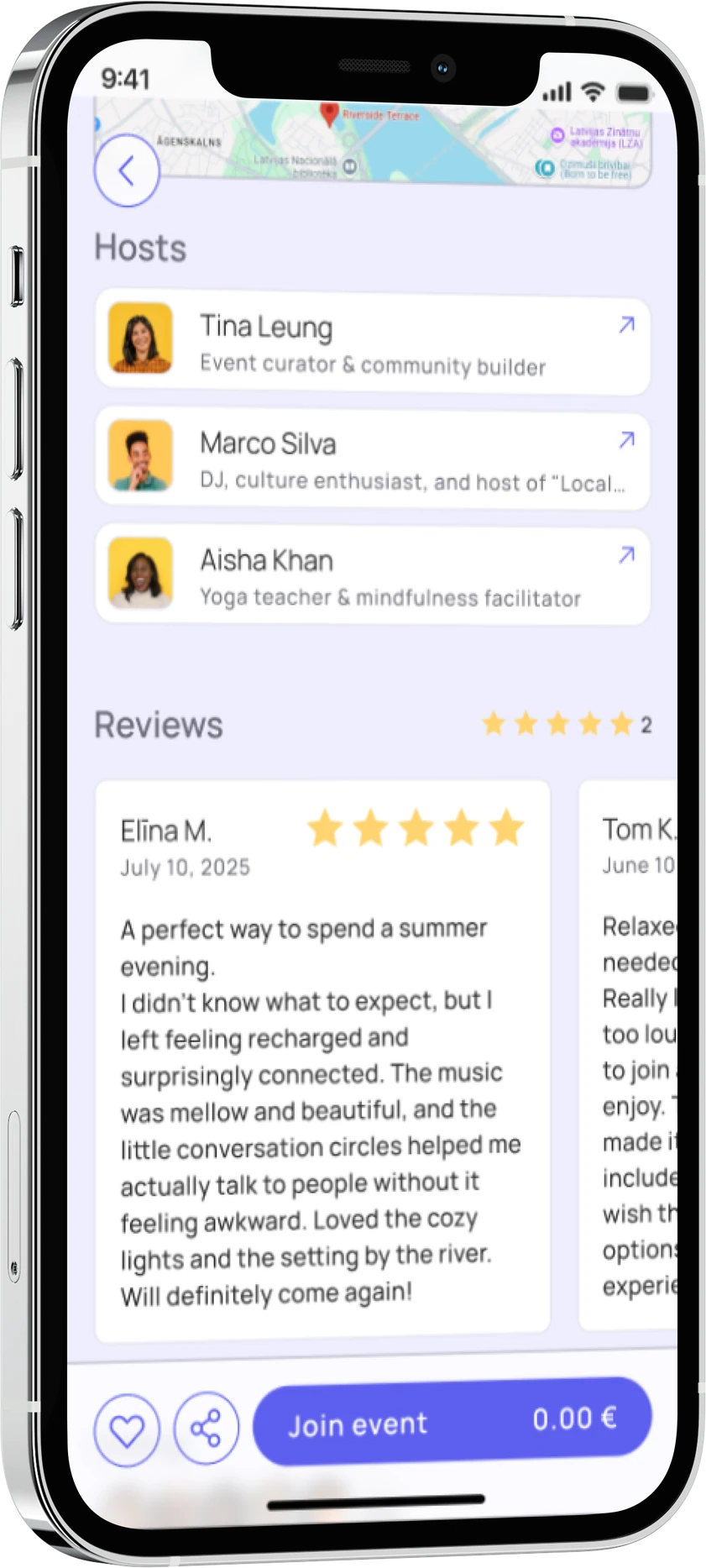
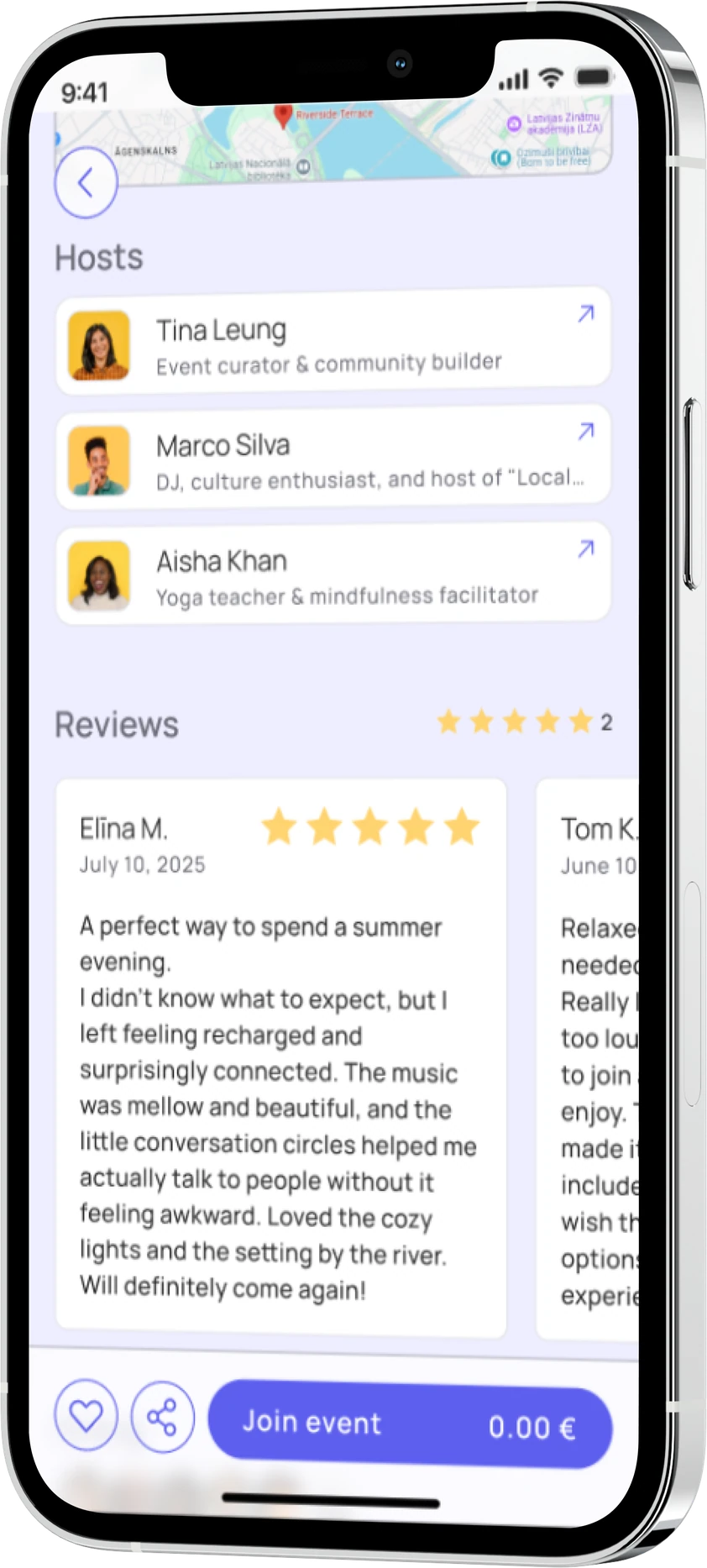
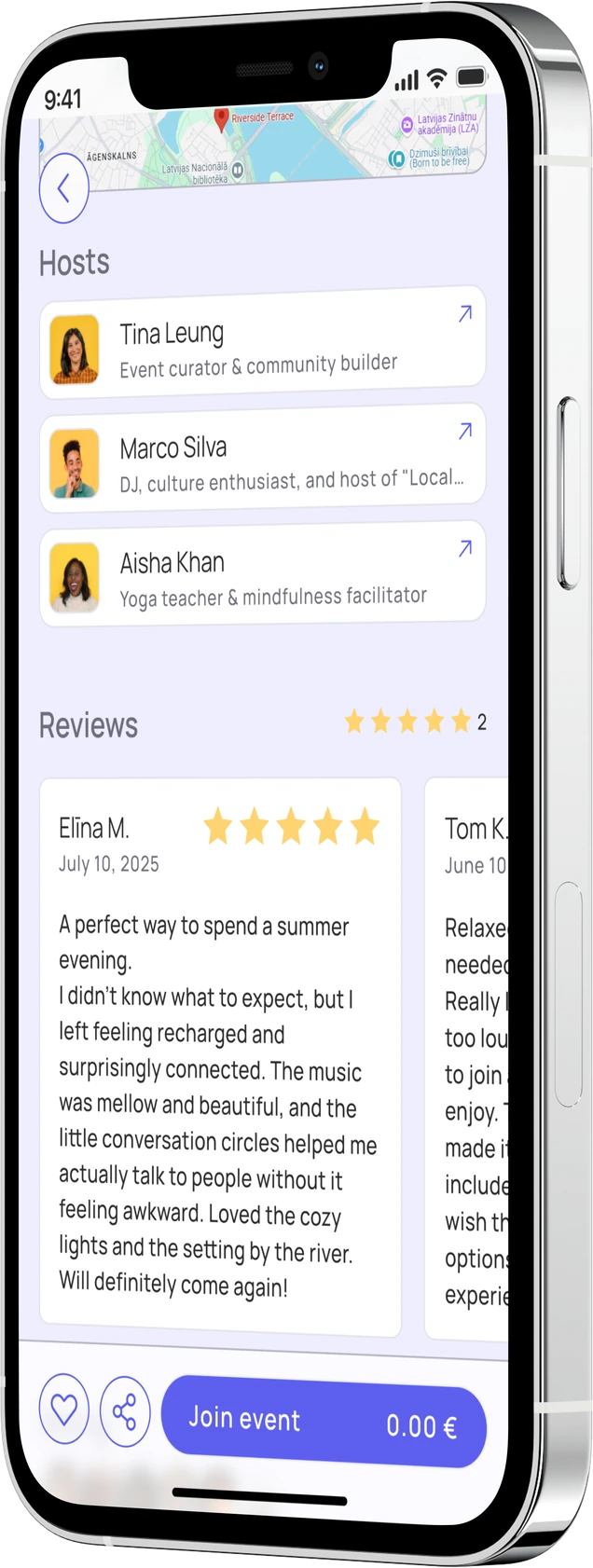
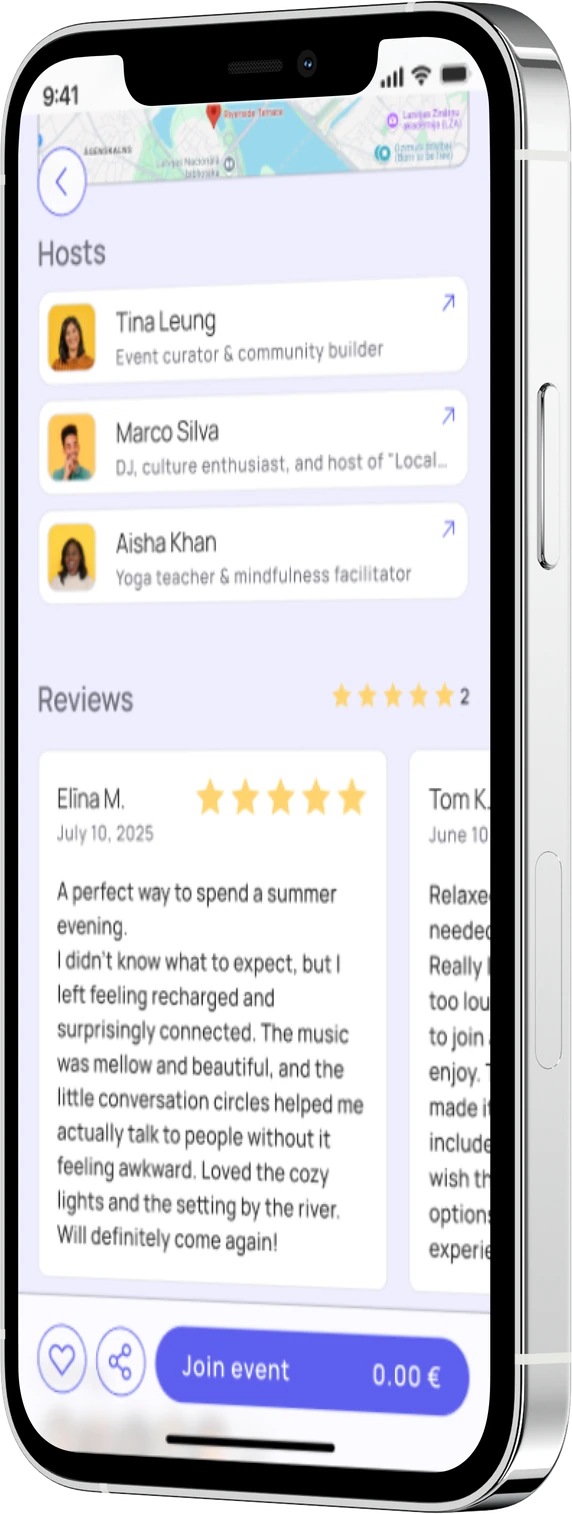
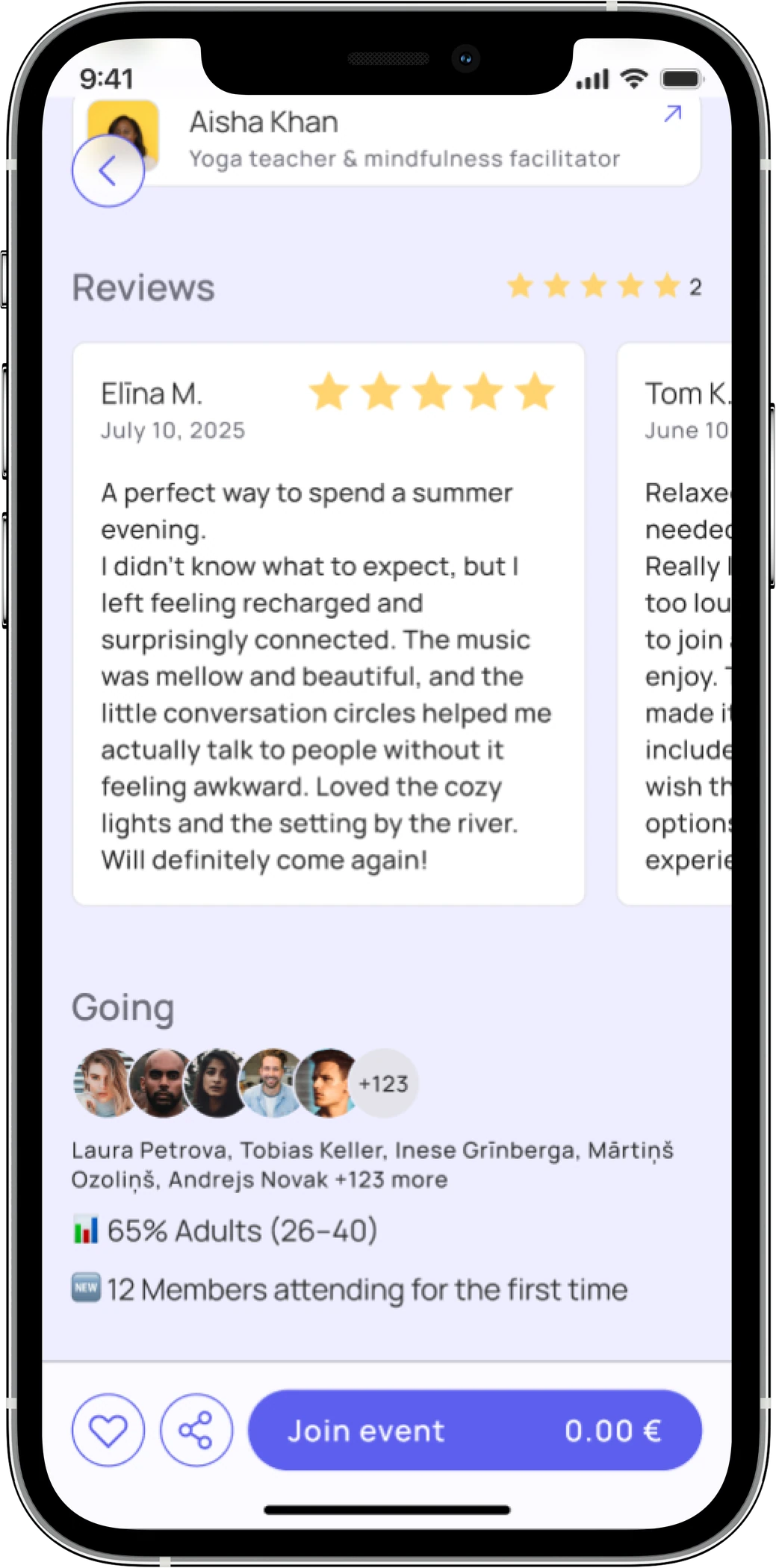
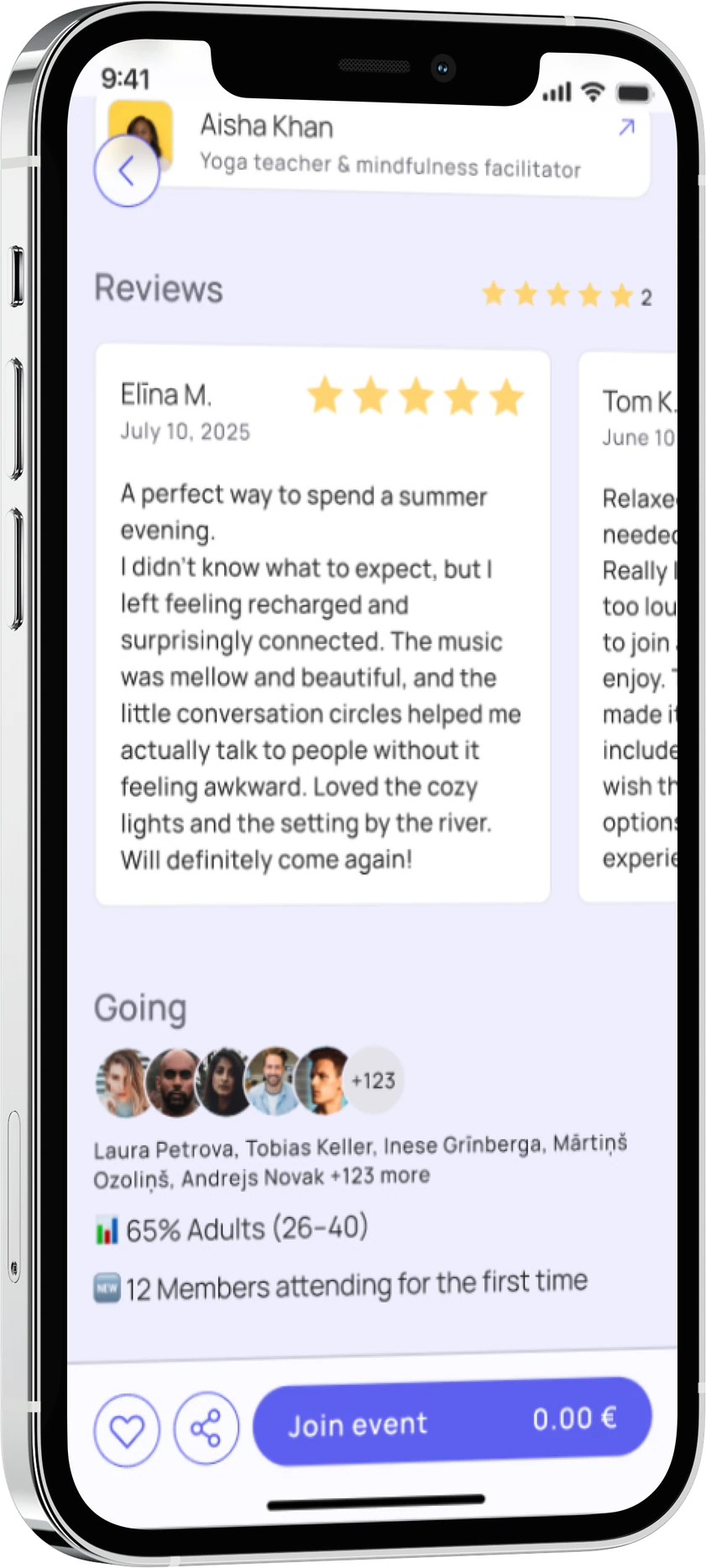
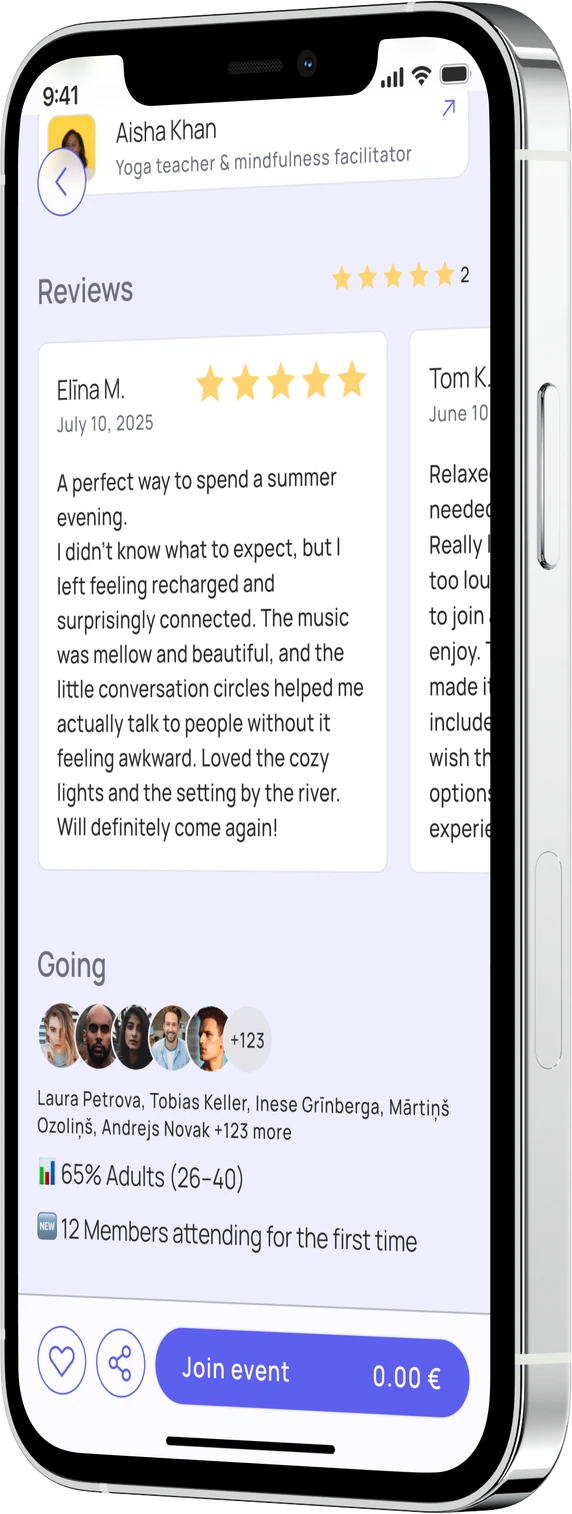
Important information is prioritized according to users' decision-making process, helping them quickly determine whether an event is right for them. The primary action, Join Event, remains visible and easily accessible throughout the experience. Secondary actions, such as Save, Share, and Add to Calendar, are also available, allowing users to revisit the event later if they are not ready to commit immediately.
09/ The Solution
Experience Overview
The final concept combines personalized recommendations with contextual filtering to create a faster and more intuitive event discovery experience. Instead of overwhelming users with hundreds of generic options, the interface adapts to their current situation, helping them discover meaningful experiences with fewer decisions and less effort.
10/ Evaluation
Results & Learnings
Although this was a concept project, it demonstrated several valuable design principles.
What worked
Contextual recommendations feel more natural than category-first browsing.
Mood-based discovery creates more engaging exploration.
Simplified information hierarchy supports faster decisions.
Multiple browsing modes accommodate different planning behaviors.
What I'd improve
With additional time, I would:
Conduct usability testing with real users.
Validate the effectiveness of mood-based recommendations.
Explore AI-powered personalization.
Design onboarding to better understand user preferences.
Measure success using discovery time, event saves, and join conversion.
11/ Reflection
Key Takeaways
One of the biggest takeaways from this project was realizing that people rarely think in categories when deciding what to do. They think in terms of mood, time, energy, and company. Designing around these natural decision-making patterns shifted the experience from searching for events to discovering experiences.